Word Explanation
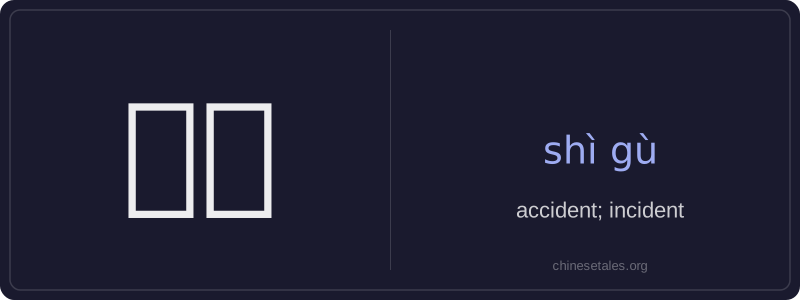
事故 (shì gù) is a compound noun meaning 'accident' or 'incident', typically referring to an unexpected, often harmful event—especially one involving injury, damage, or disruption. The first character, 事 (shì), means 'matter' or 'event'; the second, 故 (gù), means 'reason', 'cause', or 'past occurrence'. Together, they convey the idea of an unforeseen event with serious consequences—commonly used in contexts like traffic, workplace safety, or public health.
This word carries a formal or official tone and appears frequently in news reports, safety announcements, and official documents. It implies responsibility, investigation, or prevention—not casual mishaps (e.g., dropping your phone). While it can refer to minor incidents, its default connotation is negative and consequential: car crashes, factory malfunctions, medical errors, or natural disaster impacts. It’s rarely used for trivial or humorous situations, unlike English 'incident' which can be neutral.
Example Sentences
Related Words
见面
见面 literally means 'see face' — combining 见 (t
背后
背后 literally means 'back + behind' and functions
中学
'Zhōngxué' literally combines 'zhōng' (middle)
面条
‘面条’ (miàn tiáo) literally means ‘flour str
后来
Later (hòulái) is an adverb meaning 'afterwards'
我的
我的 (wǒ de) is a possessive pronoun meaning 'my'
这么
这么 (zhè me) is an adverb meaning 'so' or 'this
前面
前面 (qián miàn) literally combines 前 (qián, '