Word Explanation
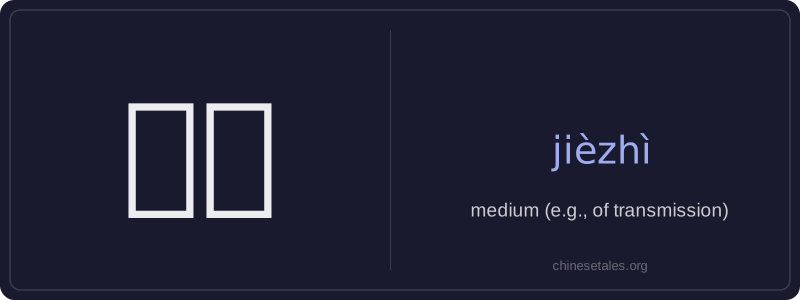
'介质' (jièzhì) is a compound noun meaning 'medium'—a substance or environment through which something (like energy, signals, or organisms) passes or propagates. The first character 介 (jiè) conveys the idea of 'intermediary' or 'between', while 质 (zhì) means 'substance' or 'material'. Together, they denote a physical or functional intermediary material that enables transmission, growth, or interaction.
This term is common in scientific, technical, and biological contexts—for example, in physics (sound transmission through air or water), telecommunications (optical fiber as a transmission medium), or biology (culture media for growing microorganisms). It’s formal and rarely used in casual speech; learners should avoid confusing it with general words like 'material' (材料) or 'environment' (环境), as 介质 specifically implies a functional role in transmission or support.
Example Sentences
Related Words
见面
见面 literally means 'see face' — combining 见 (t
背后
背后 literally means 'back + behind' and functions
中学
'Zhōngxué' literally combines 'zhōng' (middle)
面条
‘面条’ (miàn tiáo) literally means ‘flour str
后来
Later (hòulái) is an adverb meaning 'afterwards'
我的
我的 (wǒ de) is a possessive pronoun meaning 'my'
这么
这么 (zhè me) is an adverb meaning 'so' or 'this
前面
前面 (qián miàn) literally combines 前 (qián, '