Word Explanation
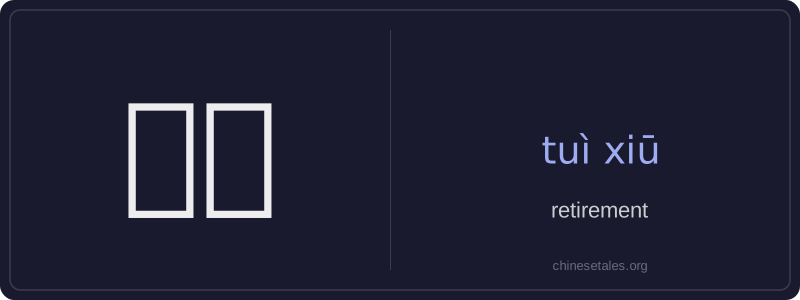
‘退休’ (tuì xiū) literally combines two characters: ‘退’ meaning ‘to withdraw, step back,’ and ‘休’ meaning ‘to rest, take a break.’ Together, they form a noun meaning ‘retirement’—the formal cessation of full-time employment, usually due to age or personal choice. It implies both the end of one’s working career and the beginning of a new life stage focused on leisure, family, or other pursuits.
This term is used formally and respectfully, often in official contexts like company announcements, government policies, or news reports. It applies primarily to salaried workers, civil servants, and teachers; it’s less commonly used for informal or freelance work. In Chinese culture, retirement is often associated with social expectations about dignity, contribution, and intergenerational support—but increasingly also with personal fulfillment and active aging.
Example Sentences
Related Words
见面
见面 literally means 'see face' — combining 见 (t
背后
背后 literally means 'back + behind' and functions
中学
'Zhōngxué' literally combines 'zhōng' (middle)
面条
‘面条’ (miàn tiáo) literally means ‘flour str
后来
Later (hòulái) is an adverb meaning 'afterwards'
我的
我的 (wǒ de) is a possessive pronoun meaning 'my'
这么
这么 (zhè me) is an adverb meaning 'so' or 'this
前面
前面 (qián miàn) literally combines 前 (qián, '