Word Explanation
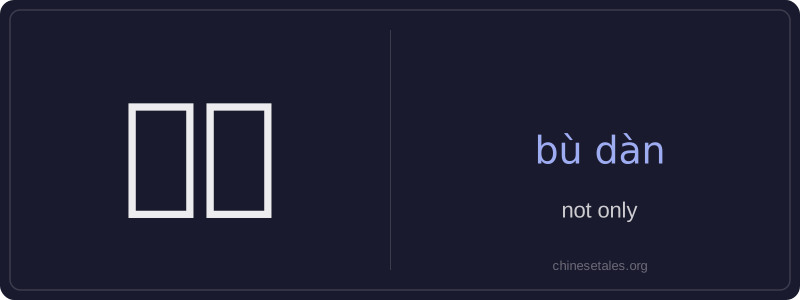
不但 is a conjunction meaning 'not only' and is almost always used in the correlative structure 不但…而且… ('not only… but also…'). It introduces the first part of a two-part clause, emphasizing that something is true and—more importantly—that an additional, often stronger or complementary, fact follows. The character 不 means 'not', and 但 means 'but' or 'only'; together, they literally convey 'not only', signaling that the statement is incomplete without the second clause.
This word is formal yet common in both written and spoken Chinese, especially in academic, journalistic, or persuasive contexts. It cannot stand alone—it must be paired with 而且, 还, 或者 even 更 (though 更 is less standard). It typically precedes verbs, adjectives, or noun phrases, and the subjects of both clauses are usually the same unless explicitly contrasted. Avoid using it without a follow-up conjunction, as doing so results in an incomplete and ungrammatical sentence.
Example Sentences
Related Words
见面
见面 literally means 'see face' — combining 见 (t
背后
背后 literally means 'back + behind' and functions
中学
'Zhōngxué' literally combines 'zhōng' (middle)
面条
‘面条’ (miàn tiáo) literally means ‘flour str
后来
Later (hòulái) is an adverb meaning 'afterwards'
我的
我的 (wǒ de) is a possessive pronoun meaning 'my'
这么
这么 (zhè me) is an adverb meaning 'so' or 'this
前面
前面 (qián miàn) literally combines 前 (qián, '