Word Explanation
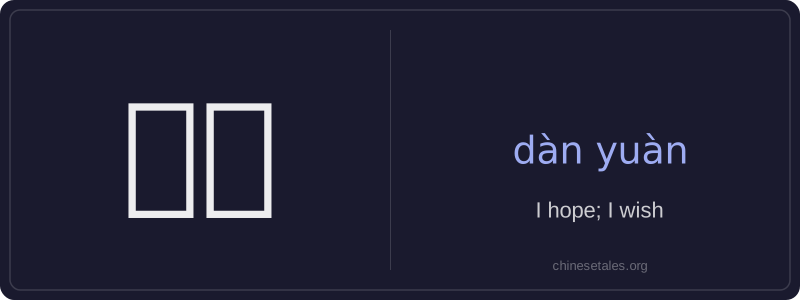
‘但愿’ is a fixed two-character conjunction expressing sincere hope or wish, often with a tone of longing, humility, or gentle resignation. Literally, 但 (dàn) means 'but' or 'only', and 愿 (yuàn) means 'to wish' or 'to hope'; together they convey 'I only wish' or 'I sincerely hope'. It’s not used to state facts or commands, but rather to introduce a desired outcome—often one that feels uncertain, ideal, or beyond full control.
This expression is common in both spoken and written Chinese, especially in reflective, poetic, or emotionally tender contexts—such as expressing goodwill toward others, hoping for peace, health, or reconciliation, or voicing quiet personal aspirations. It frequently appears at the beginning of a sentence followed by a clause (e.g., 但愿你平安), and it carries a slightly literary or heartfelt register—not as casual as 希望 but more accessible than classical alternatives like 惟愿.
Example Sentences
Related Words
见面
见面 literally means 'see face' — combining 见 (t
背后
背后 literally means 'back + behind' and functions
中学
'Zhōngxué' literally combines 'zhōng' (middle)
面条
‘面条’ (miàn tiáo) literally means ‘flour str
后来
Later (hòulái) is an adverb meaning 'afterwards'
我的
我的 (wǒ de) is a possessive pronoun meaning 'my'
这么
这么 (zhè me) is an adverb meaning 'so' or 'this
前面
前面 (qián miàn) literally combines 前 (qián, '