Word Explanation
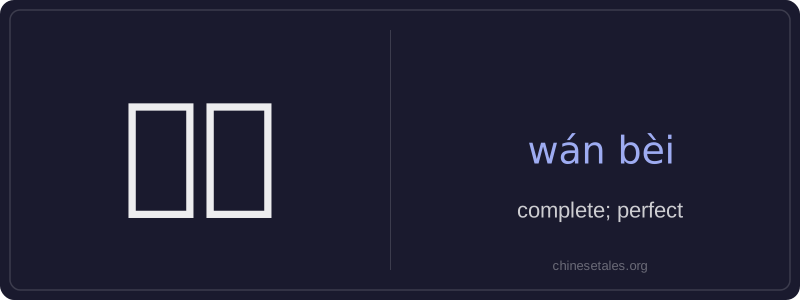
完备 (wán bèi) is an adjective meaning 'complete' or 'perfect'—not in the sense of flawless beauty, but in the sense of having all necessary parts, elements, or conditions fully present and properly arranged. The character 完 means 'complete' or 'finished', while 备 means 'prepared' or 'equipped'; together, they convey the idea of something being thoroughly prepared and lacking nothing essential.
This word is commonly used to describe systems, facilities, documents, preparations, or plans—especially in formal, administrative, or technical contexts. It implies reliability and readiness: a 完备的方案 is not just drafted, but thought through and actionable; 完备的安全措施 means all expected safeguards are in place. It’s more formal and weighty than common alternatives like 齐全 or 完整, and often appears in official announcements, manuals, or reports.
Example Sentences
Related Words
见面
见面 literally means 'see face' — combining 见 (t
背后
背后 literally means 'back + behind' and functions
中学
'Zhōngxué' literally combines 'zhōng' (middle)
面条
‘面条’ (miàn tiáo) literally means ‘flour str
后来
Later (hòulái) is an adverb meaning 'afterwards'
我的
我的 (wǒ de) is a possessive pronoun meaning 'my'
这么
这么 (zhè me) is an adverb meaning 'so' or 'this
前面
前面 (qián miàn) literally combines 前 (qián, '