Word Explanation
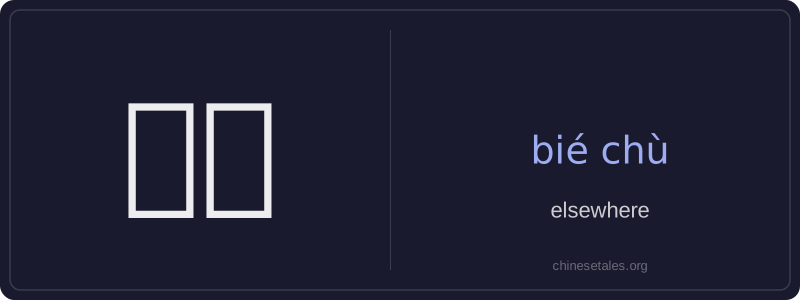
别处 means 'elsewhere' — literally 'other place'. The character 别 (bié) means 'other', 'different', or 'separate', while 处 (chù) means 'place', 'location', or 'spot'. Together, they form a compound noun that refers to any location other than the one currently under discussion or implied by context. It is neutral in register and commonly used in both spoken and written Chinese.
别处 functions flexibly: as a noun (e.g., 去别处 'go elsewhere'), or adverbially without particles (e.g., 他在别处工作 'He works elsewhere'). It often appears after verbs like 去, 来, 找, or 在, and rarely takes measure words or modifiers. Unlike 他处 (a more formal literary variant), 别处 is everyday and accessible for learners. It carries no emotional connotation but implies contrast or exclusion — always pointing away from the current or known location.
Example Sentences
Related Words
见面
见面 literally means 'see face' — combining 见 (t
背后
背后 literally means 'back + behind' and functions
中学
'Zhōngxué' literally combines 'zhōng' (middle)
面条
‘面条’ (miàn tiáo) literally means ‘flour str
后来
Later (hòulái) is an adverb meaning 'afterwards'
我的
我的 (wǒ de) is a possessive pronoun meaning 'my'
这么
这么 (zhè me) is an adverb meaning 'so' or 'this
前面
前面 (qián miàn) literally combines 前 (qián, '