Word Explanation
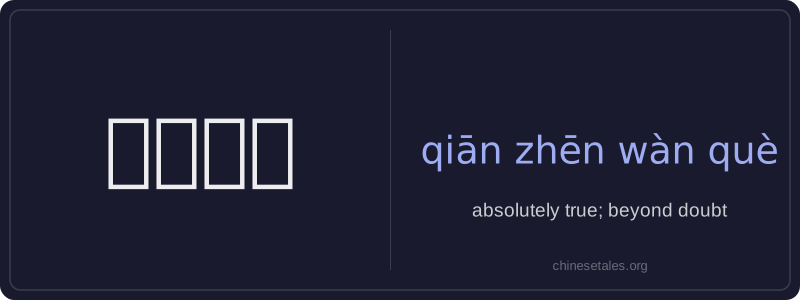
‘千真万确’ is an emphatic idiom meaning 'absolutely true' or 'beyond doubt'. Literally, it combines four characters: 千 (a thousand), 真 (true), 万 (ten thousand), and 确 (certain). The numbers 千 and 万 are used hyperbolically—not to indicate quantity, but to stress the overwhelming, indisputable nature of the truth. This phrase conveys strong conviction and leaves no room for skepticism.
It’s commonly used in spoken and written Chinese when confirming facts, defending claims, or reinforcing statements that might otherwise be doubted—especially in debates, news reports, personal testimony, or storytelling. Though formal-sounding, it appears frequently in everyday conversation when speakers want to underscore sincerity or factual reliability. It functions as a predicate or predicative complement (e.g., ‘这是千真万确的’) and rarely modifies nouns directly.
Example Sentences
Related Words
见面
见面 literally means 'see face' — combining 见 (t
背后
背后 literally means 'back + behind' and functions
中学
'Zhōngxué' literally combines 'zhōng' (middle)
面条
‘面条’ (miàn tiáo) literally means ‘flour str
后来
Later (hòulái) is an adverb meaning 'afterwards'
我的
我的 (wǒ de) is a possessive pronoun meaning 'my'
这么
这么 (zhè me) is an adverb meaning 'so' or 'this
前面
前面 (qián miàn) literally combines 前 (qián, '