Word Explanation
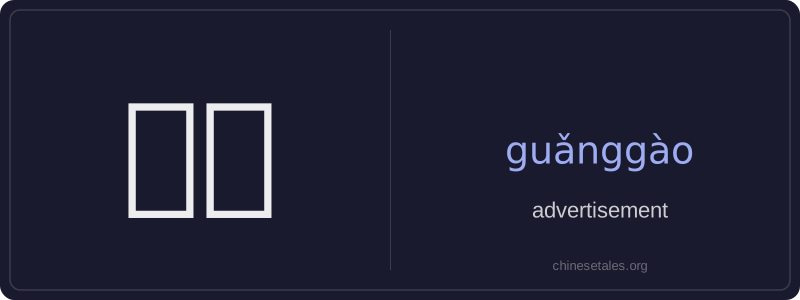
广告 (guǎnggào) literally combines 广 (guǎng), meaning 'broad' or 'extensive', and 告 (gào), meaning 'to announce' or 'to inform'. Together, they form the noun 'advertisement' — a message designed to promote a product, service, idea, or event to a wide audience. It is a neutral, formal term used across media: TV, radio, print, online platforms, and public spaces like billboards or subway stations.
This word appears frequently in everyday life — from news reports about marketing strategies to casual conversations about skipping commercials. Unlike colloquial terms like 广告片 (guǎnggào piàn, 'ad video') or 软文 (ruǎn wén, 'sponsored content'), 广告 is the standard, all-purpose noun for any paid promotional communication. It can be countable (e.g., 一则广告 yī zé guǎnggào, 'an advertisement') or used collectively (e.g., 看广告 kàn guǎnggào, 'watch ads').
Example Sentences
Related Words
见面
见面 literally means 'see face' — combining 见 (t
背后
背后 literally means 'back + behind' and functions
中学
'Zhōngxué' literally combines 'zhōng' (middle)
面条
‘面条’ (miàn tiáo) literally means ‘flour str
后来
Later (hòulái) is an adverb meaning 'afterwards'
我的
我的 (wǒ de) is a possessive pronoun meaning 'my'
这么
这么 (zhè me) is an adverb meaning 'so' or 'this
前面
前面 (qián miàn) literally combines 前 (qián, '