Word Explanation
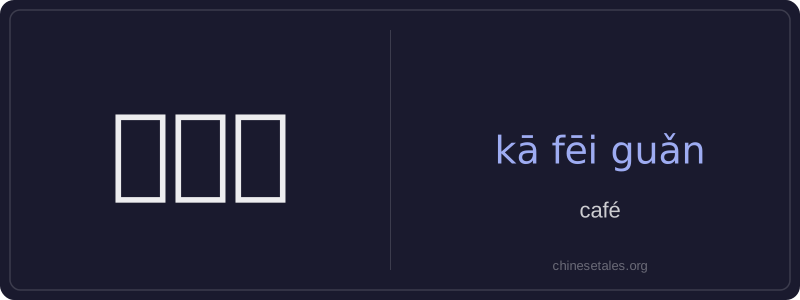
咖啡馆 (kā fēi guǎn) literally combines three characters: 咖 (kā), 啡 (fēi), and 馆 (guǎn). The first two together — 咖啡 — are a phonetic transliteration of the English word 'coffee', borrowed into Chinese centuries ago. The third character, 馆, means 'hall', 'establishment', or 'venue' — it’s commonly used in words for public service places like 图书馆 (tú shū guǎn, library) or 餐馆 (cān guǎn, restaurant). So 咖啡馆 literally means 'coffee establishment' and functions as the standard, neutral term for a café — a place where people gather to drink coffee, tea, or light refreshments, often with Wi-Fi, books, or quiet seating.
It’s widely used across China in both urban and suburban settings, from independent neighborhood cafés to chain stores. Unlike more formal terms like 咖啡厅 (kā fēi tīng, 'coffee lounge'), 咖啡馆 carries a relaxed, accessible connotation and is suitable for everyday speech, writing, and signage.
Example Sentences
Related Words
见面
见面 literally means 'see face' — combining 见 (t
背后
背后 literally means 'back + behind' and functions
中学
'Zhōngxué' literally combines 'zhōng' (middle)
面条
‘面条’ (miàn tiáo) literally means ‘flour str
后来
Later (hòulái) is an adverb meaning 'afterwards'
我的
我的 (wǒ de) is a possessive pronoun meaning 'my'
这么
这么 (zhè me) is an adverb meaning 'so' or 'this
前面
前面 (qián miàn) literally combines 前 (qián, '