Word Explanation
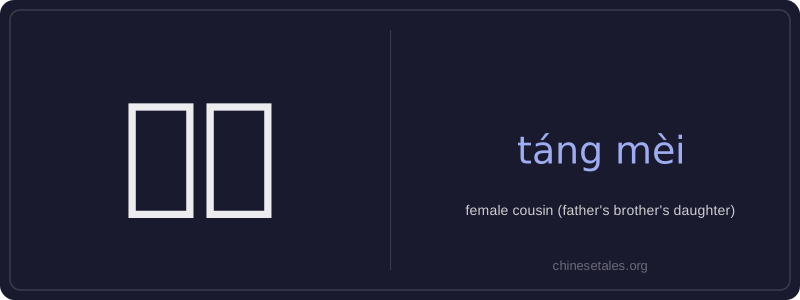
‘Táng mèi’ refers specifically to a female cousin on your father’s side — more precisely, the daughter of your father’s brother. The character ‘堂’ (táng) indicates kinship through the paternal line and implies shared ancestral lineage, while ‘妹’ (mèi) means ‘younger sister’, signaling both gender and relative age (though not necessarily younger than the speaker — it’s a conventional term regardless of actual age). Unlike ‘biǎo mèi’ (cousin on mother’s side), ‘táng mèi’ carries a connotation of closer familial ties in traditional Chinese culture, often reflected in shared family rituals, surname, and household connections.
This term is commonly used in everyday conversation when introducing relatives, discussing family gatherings, or referring to childhood companions from extended family. It appears frequently in narratives about growing up, holiday reunions, or inheritance matters. While formal in register, ‘táng mèi’ is neutral and respectful — never colloquial or diminutive — and is appropriate for both spoken and written contexts, including official documents like family registries.
Example Sentences
Related Words
见面
见面 literally means 'see face' — combining 见 (t
背后
背后 literally means 'back + behind' and functions
中学
'Zhōngxué' literally combines 'zhōng' (middle)
面条
‘面条’ (miàn tiáo) literally means ‘flour str
后来
Later (hòulái) is an adverb meaning 'afterwards'
我的
我的 (wǒ de) is a possessive pronoun meaning 'my'
这么
这么 (zhè me) is an adverb meaning 'so' or 'this
前面
前面 (qián miàn) literally combines 前 (qián, '