Word Explanation
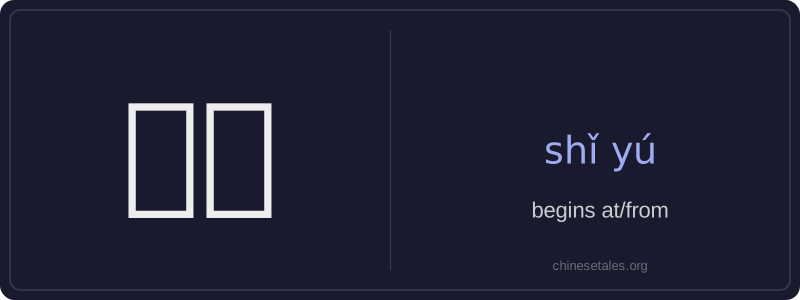
始于 is a prepositional phrase meaning 'begins at' or 'begins from'. It combines the verb 始 (shǐ), meaning 'to begin', and the preposition 于 (yú), which marks the starting point in time, location, or condition. Unlike the standalone verb 开始 (kāishǐ), 始于 is more formal and literary, commonly used in written Chinese—such as academic texts, historical accounts, official documents, or announcements—to indicate precise origins.
This phrase always precedes a noun or noun phrase indicating the point of origin: a time (e.g., 2020年), place (e.g., 北京), or abstract concept (e.g., 小学). It cannot stand alone as a predicate; instead, it functions adverbially to modify verbs like 'originated', 'dates back to', or 'started'. While grammatically similar to English 'begins at/from', it’s rarely used in casual speech—native speakers typically choose 开始于 in spoken contexts or omit the preposition entirely when context is clear.
Example Sentences
Related Words
见面
见面 literally means 'see face' — combining 见 (t
背后
背后 literally means 'back + behind' and functions
中学
'Zhōngxué' literally combines 'zhōng' (middle)
面条
‘面条’ (miàn tiáo) literally means ‘flour str
后来
Later (hòulái) is an adverb meaning 'afterwards'
我的
我的 (wǒ de) is a possessive pronoun meaning 'my'
这么
这么 (zhè me) is an adverb meaning 'so' or 'this
前面
前面 (qián miàn) literally combines 前 (qián, '