Word Explanation
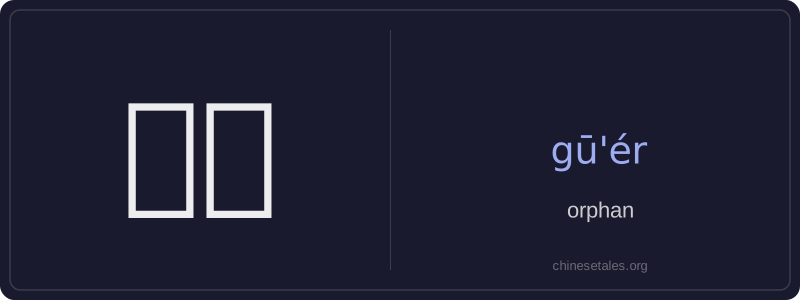
'Orphan' refers to a child who has lost both parents. The character 孤 (gū) means 'alone', 'lonely', or 'parentless' — it carries the sense of being bereft and vulnerable. The character 儿 (ér) means 'child' and functions here as a noun suffix, specifying the person affected. Together, 孤儿 literally means 'a lonely/parentless child'. It is a formal, neutral term used in legal, social, educational, and humanitarian contexts — for example, in discussions about welfare policies, adoption, or charity work.
Unlike colloquial or emotionally loaded expressions, 孤儿 is objective and respectful. It does not imply age beyond childhood (though usage sometimes extends to young adults still dependent on guardianship), nor does it specify cause of parental loss. It is distinct from terms like 失怙 (shīhù, 'lost father') or 失恃 (shīshì, 'lost mother'), which refer to losing only one parent. In modern Chinese, 孤儿 appears frequently in news reports, NGO materials, and official documents related to child protection and social services.
Example Sentences
Related Words
见面
见面 literally means 'see face' — combining 见 (t
背后
背后 literally means 'back + behind' and functions
中学
'Zhōngxué' literally combines 'zhōng' (middle)
面条
‘面条’ (miàn tiáo) literally means ‘flour str
后来
Later (hòulái) is an adverb meaning 'afterwards'
我的
我的 (wǒ de) is a possessive pronoun meaning 'my'
这么
这么 (zhè me) is an adverb meaning 'so' or 'this
前面
前面 (qián miàn) literally combines 前 (qián, '