Word Explanation
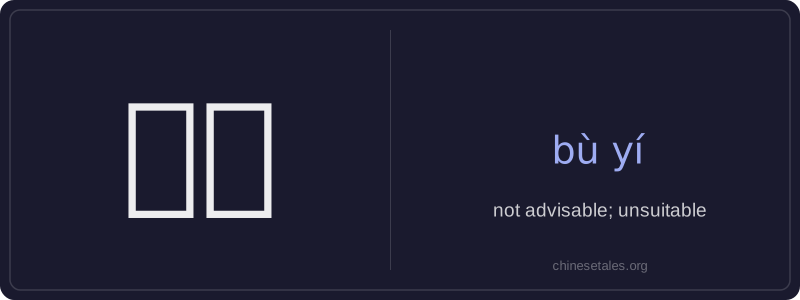
不宜 is an adjective meaning 'not advisable' or 'unsuitable', commonly used to warn against certain actions, foods, environments, or conditions—especially in health, medicine, and daily life contexts. The character 不 means 'not', while 宜 means 'suitable', 'appropriate', or 'advisable'; together, they form a concise, formal expression of caution or prohibition. It often appears in written instructions, medical advice, weather reports, or dietary guidelines.
This term carries a neutral-to-formal register and is rarely used in casual spoken Chinese; native speakers tend to use simpler alternatives like 不好 (bù hǎo) or 最好别 (zuì hǎo bié) in conversation. 不宜 is frequently followed by a verb (e.g., 不宜食用, 不宜剧烈运动) or a noun phrase (e.g., 不宜人群), indicating who or what the warning applies to. It implies objective unsuitability based on reason, evidence, or convention—not personal preference.
Example Sentences
Related Words
见面
见面 literally means 'see face' — combining 见 (t
背后
背后 literally means 'back + behind' and functions
中学
'Zhōngxué' literally combines 'zhōng' (middle)
面条
‘面条’ (miàn tiáo) literally means ‘flour str
后来
Later (hòulái) is an adverb meaning 'afterwards'
我的
我的 (wǒ de) is a possessive pronoun meaning 'my'
这么
这么 (zhè me) is an adverb meaning 'so' or 'this
前面
前面 (qián miàn) literally combines 前 (qián, '