Word Explanation
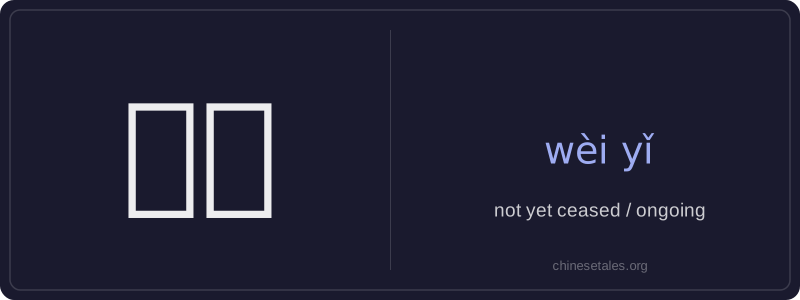
‘未已’ is a classical and literary adverb meaning ‘not yet ceased’ or ‘still ongoing’. It combines two characters: 未 (wèi), meaning ‘not yet’, and 已 (yǐ), meaning ‘already’ or ‘ceased’. Together, they form a compact, emphatic expression indicating that an action, state, or feeling continues without end—often with a tone of persistence, intensity, or unresolved tension. Though rooted in classical Chinese, it appears in modern formal writing, poetry, speeches, and idiomatic expressions.
This term frequently modifies verbs or adjectives to stress continuity, especially for emotions (e.g., 悲伤未已 — grief has not yet subsided) or natural phenomena (e.g., 风雨未已 — wind and rain continue unabated). It carries a slightly solemn or poetic register and is rarely used in casual speech. Learners should note that 未已 is not a standalone noun but functions adverbially and almost always appears post-verbally or predicatively in written contexts.
Example Sentences
Related Words
见面
见面 literally means 'see face' — combining 见 (t
背后
背后 literally means 'back + behind' and functions
中学
'Zhōngxué' literally combines 'zhōng' (middle)
面条
‘面条’ (miàn tiáo) literally means ‘flour str
后来
Later (hòulái) is an adverb meaning 'afterwards'
我的
我的 (wǒ de) is a possessive pronoun meaning 'my'
这么
这么 (zhè me) is an adverb meaning 'so' or 'this
前面
前面 (qián miàn) literally combines 前 (qián, '