Word Explanation
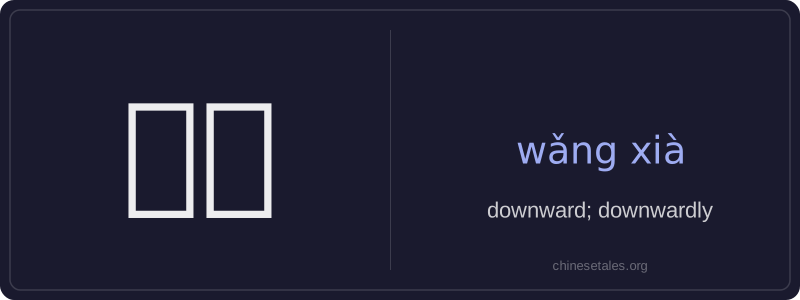
往下 is an adverb meaning 'downward' or 'downwardly', indicating movement or direction from a higher to a lower position in space, rank, degree, or time. The character 往 means 'toward' or 'in the direction of', and 下 means 'down' or 'below'; together, they form a directional compound emphasizing the downward trajectory. It is commonly used with verbs like 走 (walk), 看 (look), 滑 (slide), or 流 (flow) to specify direction.
This word appears frequently in physical descriptions (e.g., water flowing downward), instructions ('look downward'), data trends ('prices going downward'), and metaphorical contexts ('morale sinking'). Unlike the standalone word 下, which can function as a noun, verb, or complement, 往下 is strictly adverbial and usually precedes the main verb. It often co-occurs with directional complements or prepositional phrases but does not take objects itself.
Example Sentences
Related Words
见面
见面 literally means 'see face' — combining 见 (t
背后
背后 literally means 'back + behind' and functions
中学
'Zhōngxué' literally combines 'zhōng' (middle)
面条
‘面条’ (miàn tiáo) literally means ‘flour str
后来
Later (hòulái) is an adverb meaning 'afterwards'
我的
我的 (wǒ de) is a possessive pronoun meaning 'my'
这么
这么 (zhè me) is an adverb meaning 'so' or 'this
前面
前面 (qián miàn) literally combines 前 (qián, '