Word Explanation
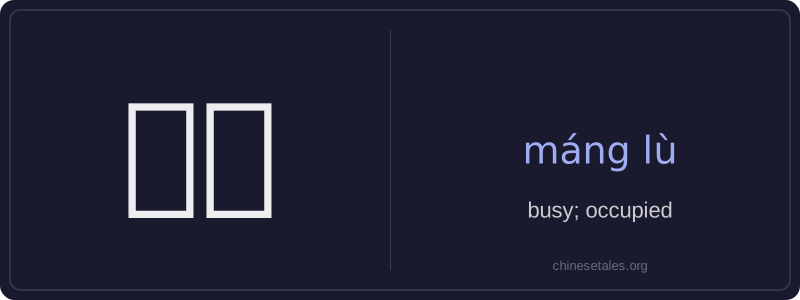
忙碌 is an adjective meaning 'busy' or 'occupied', describing a state of having many tasks or responsibilities and little free time. The character 忙 (máng) means 'busy' or 'hurried', often implying urgency or mental preoccupation, while 碌 (lù) originally meant 'to labor repeatedly'—as in the phrase 庸碌 (yōng lù, 'mediocre and industrious'). Together, they form a reduplicative compound that intensifies the sense of constant, often tiring activity.
This word is commonly used to describe people’s daily lives—students during exam season, professionals with tight deadlines, or parents juggling work and family. It carries a neutral-to-slightly-negative connotation, suggesting exhaustion or lack of leisure, unlike the more neutral 忙 (máng) alone. 忙碌 is frequently modified by degree adverbs like 很, 非常, or 一直, and often appears before nouns (e.g., 忙碌的生活) or as a predicate (e.g., 他最近很忙碌).
Example Sentences
Related Words
见面
见面 literally means 'see face' — combining 见 (t
背后
背后 literally means 'back + behind' and functions
中学
'Zhōngxué' literally combines 'zhōng' (middle)
面条
‘面条’ (miàn tiáo) literally means ‘flour str
后来
Later (hòulái) is an adverb meaning 'afterwards'
我的
我的 (wǒ de) is a possessive pronoun meaning 'my'
这么
这么 (zhè me) is an adverb meaning 'so' or 'this
前面
前面 (qián miàn) literally combines 前 (qián, '