Word Explanation
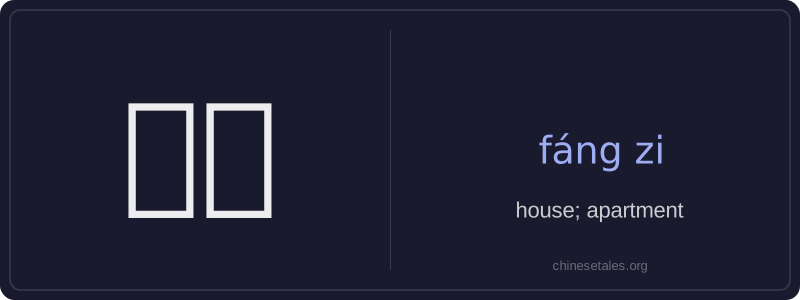
房子 (fáng zi) is a common, neutral-term noun meaning 'house' or 'apartment'—any enclosed residential building or unit where people live. The first character 房 (fáng) originally meant 'room' or 'chamber' and carries the core idea of sheltered space; the second character 子 (zi) is a diminutive or nominalizing suffix that turns the root into a concrete, countable noun. Together, they form a general, everyday word for any dwelling—not specifying size, type, or ownership.
This word is widely used in daily conversation, real estate, and formal contexts alike. It’s more inclusive than specific terms like 别墅 (biéshù, 'villa') or 公寓 (gōngyù, 'apartment complex'), and unlike 居所 (jūsuǒ, 'residence', formal/literary), 房子 is colloquial and accessible to learners. It appears in compounds like 房子装修 (fáng zi zhuāngxiū, 'home renovation') and 房子贵 (fáng zi guì, 'houses are expensive'), reflecting its centrality in discussions about living, cost, and family life.
Example Sentences
Related Words
见面
见面 literally means 'see face' — combining 见 (t
背后
背后 literally means 'back + behind' and functions
中学
'Zhōngxué' literally combines 'zhōng' (middle)
面条
‘面条’ (miàn tiáo) literally means ‘flour str
后来
Later (hòulái) is an adverb meaning 'afterwards'
我的
我的 (wǒ de) is a possessive pronoun meaning 'my'
这么
这么 (zhè me) is an adverb meaning 'so' or 'this
前面
前面 (qián miàn) literally combines 前 (qián, '