Word Explanation
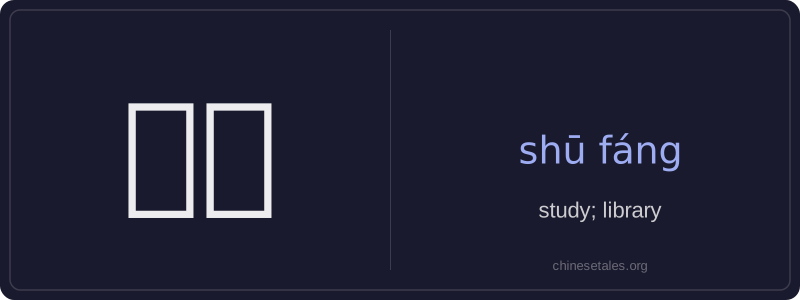
书房 (shū fáng) literally combines 书 (shū), meaning 'book' or 'writing', and 房 (fáng), meaning 'room'. Together, it refers to a dedicated room used for reading, studying, writing, or working — essentially a personal study or home library. Unlike a public library (图书馆), a 书房 is typically private, quiet, and equipped with bookshelves, a desk, and comfortable seating. It reflects both function and cultural value: in traditional Chinese homes, the 书房 was a space for scholarly pursuit and self-cultivation.
In modern usage, 书房 remains common in homes, apartments, and even offices — especially where someone needs a quiet, focused environment. While it often contains many books, its defining feature is its purpose: intellectual activity, not just storage. The word carries a subtle connotation of seriousness, order, and personal discipline, making it more formal and refined than generic terms like 房间 (room).
Example Sentences
Related Words
见面
见面 literally means 'see face' — combining 见 (t
背后
背后 literally means 'back + behind' and functions
中学
'Zhōngxué' literally combines 'zhōng' (middle)
面条
‘面条’ (miàn tiáo) literally means ‘flour str
后来
Later (hòulái) is an adverb meaning 'afterwards'
我的
我的 (wǒ de) is a possessive pronoun meaning 'my'
这么
这么 (zhè me) is an adverb meaning 'so' or 'this
前面
前面 (qián miàn) literally combines 前 (qián, '