Word Explanation
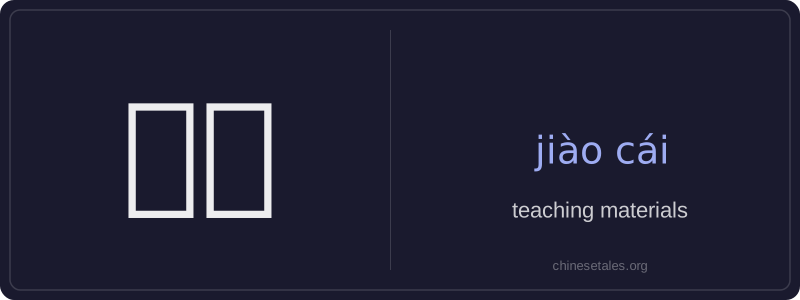
教材 (jiào cái) literally combines 教 (jiào), meaning 'to teach', and 材 (cái), meaning 'material' or 'resource'. Together, they refer to the official or structured materials used in teaching and learning—such as textbooks, workbooks, lesson plans, digital resources, or curated reading selections. These are typically designed to align with a curriculum and support specific learning objectives.
教材 is a formal, neutral term widely used in educational contexts across China and other Chinese-speaking regions. It emphasizes purpose-built content for instruction—not just any book or article, but material intentionally selected or created to facilitate learning. Teachers choose, adapt, or develop 教材; schools adopt approved 教材; and education authorities regulate their use. While often translated as 'textbook', 教材 is broader—it may include audio recordings, video lessons, or interactive software when used pedagogically.
Example Sentences
Related Words
见面
见面 literally means 'see face' — combining 见 (t
背后
背后 literally means 'back + behind' and functions
中学
'Zhōngxué' literally combines 'zhōng' (middle)
面条
‘面条’ (miàn tiáo) literally means ‘flour str
后来
Later (hòulái) is an adverb meaning 'afterwards'
我的
我的 (wǒ de) is a possessive pronoun meaning 'my'
在家
'Zài jiā' literally combines the preposition 'z
不对
不对 (bù duì) literally combines 不 (bù), meani