Word Explanation
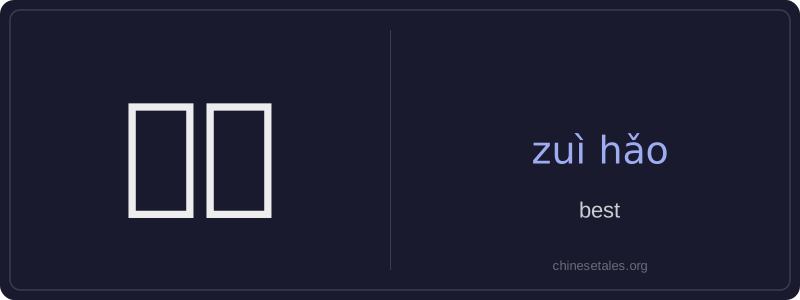
最好 means 'best' and functions primarily as an adjective or adverb in Chinese. Literally, 最 (zuì) means 'most' or 'extreme', and 好 (hǎo) means 'good'; together, they form a comparative superlative meaning 'the best'. Unlike English, 最好 is rarely used alone as a noun (e.g., 'the best' as a subject); instead, it usually modifies a noun ('the best option'), follows a verb to express recommendation ('had better do X'), or stands before an adjective/adverb to intensify it ('best possible').
It commonly appears in suggestions, advice, and polite recommendations — for example, when giving health tips, scheduling plans, or offering solutions. It carries a gentle, pragmatic tone, not absolute certainty; saying '最好休息' implies 'it would be wisest to rest', not 'you must rest'. It’s widely used in daily conversation, written instructions, and formal advice, making it essential for expressing soft obligation or optimal choice.
Example Sentences
Related Words
见面
见面 literally means 'see face' — combining 见 (t
背后
背后 literally means 'back + behind' and functions
中学
'Zhōngxué' literally combines 'zhōng' (middle)
面条
‘面条’ (miàn tiáo) literally means ‘flour str
后来
Later (hòulái) is an adverb meaning 'afterwards'
我的
我的 (wǒ de) is a possessive pronoun meaning 'my'
在家
'Zài jiā' literally combines the preposition 'z
不对
不对 (bù duì) literally combines 不 (bù), meani