Word Explanation
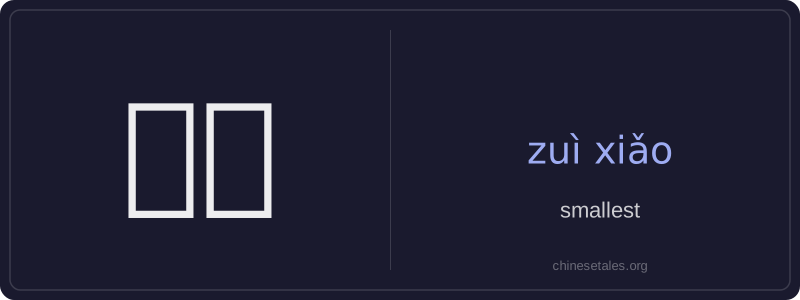
最小 (zuì xiǎo) is an adjective meaning 'smallest' — the superlative form of 小 (xiǎo, 'small'). It combines 最 (zuì), the universal superlative prefix meaning 'most', with 小 (xiǎo), meaning 'small'. Unlike English, Chinese does not change word endings for comparison; instead, it uses 最 before adjectives to express the highest degree. 最小 always modifies a noun directly and typically appears before it, as in 最小的动物 (the smallest animal).
This term is commonly used in scientific, everyday, and comparative contexts — especially when ranking size among animals, objects, or data points. It implies an absolute extreme within a defined group (e.g., among known species or items under discussion), not just relative smallness. While it can describe abstract concepts like 'smallest chance', its most frequent and concrete usage relates to physical size, particularly in biology and education — hence its strong association with Animals.
Example Sentences
Related Words
见面
见面 literally means 'see face' — combining 见 (t
背后
背后 literally means 'back + behind' and functions
中学
'Zhōngxué' literally combines 'zhōng' (middle)
面条
‘面条’ (miàn tiáo) literally means ‘flour str
后来
Later (hòulái) is an adverb meaning 'afterwards'
我的
我的 (wǒ de) is a possessive pronoun meaning 'my'
在家
'Zài jiā' literally combines the preposition 'z
不对
不对 (bù duì) literally combines 不 (bù), meani