Word Explanation
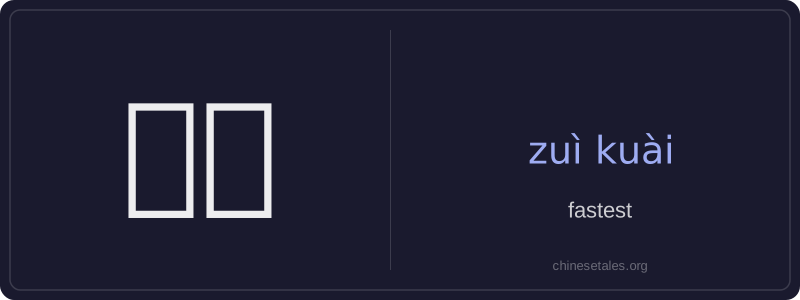
最快 (zuì kuài) literally means 'most fast' and functions as the superlative form of the adjective 快 (kuài, 'fast'). It is formed by combining the intensifier 最 (zuì, 'most') with the adjective 快. Unlike English, Chinese does not change the adjective itself to form the superlative — instead, it adds 最 before it. This pattern applies to many one-syllable adjectives (e.g., 大 → 最大, 好 → 最好). 最快 is commonly used to describe speed in physical movement, performance, or processes — such as animals running, vehicles traveling, or computers processing.
It can modify nouns directly (e.g., 最快的猎豹), serve as a predicate (e.g., 这辆车最快), or appear after 是 in comparisons (e.g., 它是最快的). While often associated with measurable speed, it’s also used figuratively — for example, describing the quickest way to solve a problem or the fastest-growing plant. Note that 最快 cannot stand alone as a noun without context or modification (e.g., *最快的 is incomplete; it needs 的 + noun or a verb phrase).
Example Sentences
Related Words
见面
见面 literally means 'see face' — combining 见 (t
背后
背后 literally means 'back + behind' and functions
中学
'Zhōngxué' literally combines 'zhōng' (middle)
面条
‘面条’ (miàn tiáo) literally means ‘flour str
后来
Later (hòulái) is an adverb meaning 'afterwards'
我的
我的 (wǒ de) is a possessive pronoun meaning 'my'
在家
'Zài jiā' literally combines the preposition 'z
不对
不对 (bù duì) literally combines 不 (bù), meani