Word Explanation
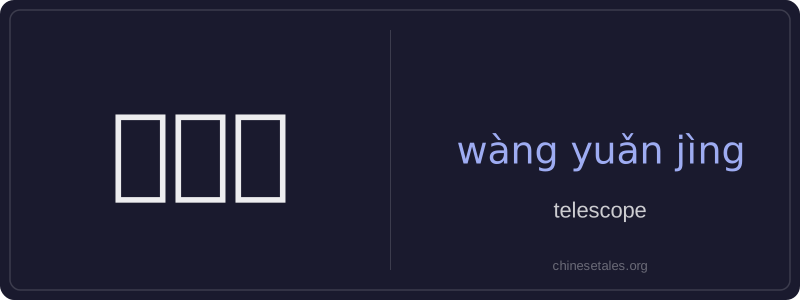
‘望远镜’ literally means ‘look-far-mirror’ — combining 望 (to look/gaze), 远 (far/distant), and 镜 (mirror/lens). It refers to an optical instrument that magnifies distant objects, especially used in astronomy, navigation, or outdoor observation. Unlike simple magnifiers, a telescope uses lenses or mirrors to gather and focus light, enabling clear viewing of celestial bodies like stars and planets, or terrestrial scenes such as mountain ridges or wildlife from afar.
The word is neutral in register and commonly used in both everyday and scientific contexts. While often associated with astronomy, it’s also used casually — for instance, at concerts, birdwatching, or sightseeing. Its structure reflects classical Chinese compound formation: verb + adjective + noun, where the first two characters describe function and the last names the object type. It’s rarely used metaphorically and almost always refers to a physical device.
Example Sentences
Related Words
见面
见面 literally means 'see face' — combining 见 (t
背后
背后 literally means 'back + behind' and functions
中学
'Zhōngxué' literally combines 'zhōng' (middle)
面条
‘面条’ (miàn tiáo) literally means ‘flour str
后来
Later (hòulái) is an adverb meaning 'afterwards'
我的
我的 (wǒ de) is a possessive pronoun meaning 'my'
在家
'Zài jiā' literally combines the preposition 'z
不对
不对 (bù duì) literally combines 不 (bù), meani