Word Explanation
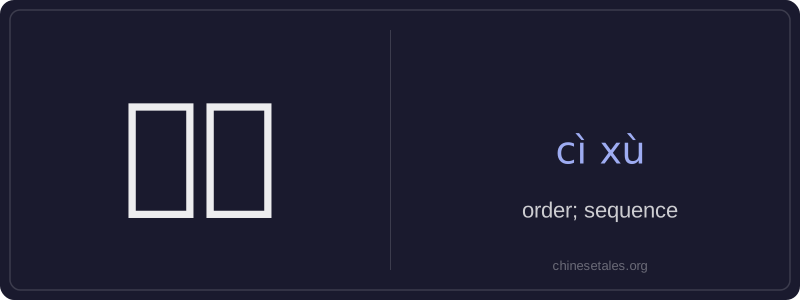
次序 means 'order' or 'sequence' — the fixed or logical arrangement in which things occur, happen, or are placed. The first character 次 (cì) originally meant 'layer', 'level', or 'instance' (as in 'a time', 'a turn'), while 序 (xù) means 'sequence', 'arrangement', or 'introduction' — it carries the sense of proper progression or hierarchy. Together, they emphasize a structured, often time- or priority-based, series: not just random order, but one that follows rules, logic, or convention.
This word is commonly used in formal, written, or instructional contexts — such as describing steps in a process, seating arrangements, queueing systems, or chronological narratives. It’s more neutral and objective than words like 顺序 (shùn xù), and slightly more formal than 排列 (pái liè). You’ll see it in textbooks, official notices, schedules, and instructions where precise, unambiguous sequencing matters.
Example Sentences
Related Words
见面
见面 literally means 'see face' — combining 见 (t
背后
背后 literally means 'back + behind' and functions
我的
我的 (wǒ de) is a possessive pronoun meaning 'my'
中学
'Zhōngxué' literally combines 'zhōng' (middle)
面条
‘面条’ (miàn tiáo) literally means ‘flour str
后来
Later (hòulái) is an adverb meaning 'afterwards'
在家
'Zài jiā' literally combines the preposition 'z
不对
不对 (bù duì) literally combines 不 (bù), meani