Word Explanation
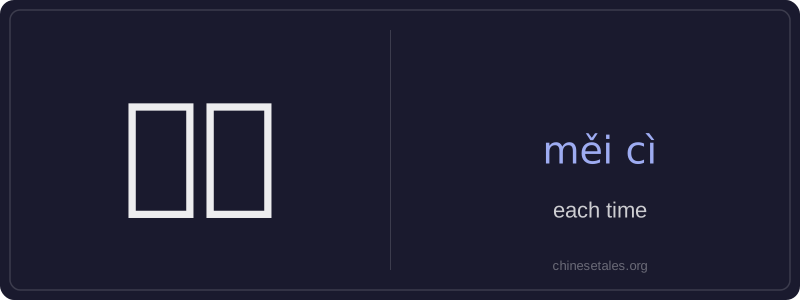
每次 (měi cì) literally combines 每 (měi, 'each' or 'every') and 次 (cì, 'time' or 'instance'). Together, it functions as an adverb meaning 'each time' or 'every time', emphasizing repetition across individual occurrences of an action or event. It always modifies a verb phrase and typically appears at the beginning of a clause or before the verb.
This word is extremely common in daily conversation and writing when describing habitual or repeated behavior — for example, routines, reactions, or predictable outcomes. Unlike 每天 (every day) or 每周 (every week), 每次 focuses on discrete, countable instances rather than fixed time intervals. It pairs naturally with verbs like 去 (go), 吃 (eat), 看 (watch), or feel (e.g., 感到紧张). It’s neutral in register and appropriate in both spoken and written Chinese.
Example Sentences
Related Words
见面
见面 literally means 'see face' — combining 见 (t
背后
背后 literally means 'back + behind' and functions
我的
我的 (wǒ de) is a possessive pronoun meaning 'my'
中学
'Zhōngxué' literally combines 'zhōng' (middle)
面条
‘面条’ (miàn tiáo) literally means ‘flour str
后来
Later (hòulái) is an adverb meaning 'afterwards'
在家
'Zài jiā' literally combines the preposition 'z
不对
不对 (bù duì) literally combines 不 (bù), meani