Word Explanation
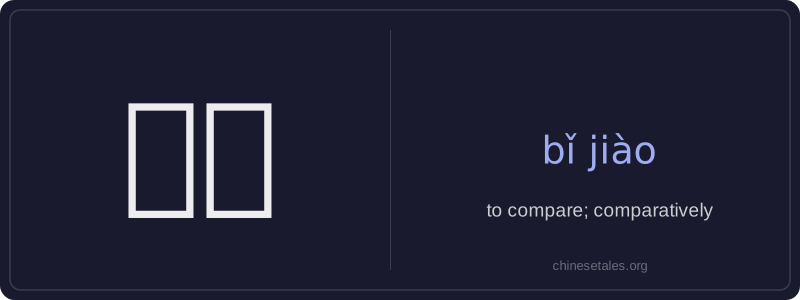
比较 (bǐ jiào) is a versatile word meaning 'to compare' as a verb, or 'comparatively' or 'relatively' as an adverb. The character 比 (bǐ) originally meant 'to match' or 'to be equal to', while 较 (jiào) means 'to examine' or 'to measure'. Together, they form a compound emphasizing the act of evaluating two or more things side by side for similarities and differences. As a verb, it’s often followed by 跟 or 和 to introduce the second item being compared (e.g., 跟…比较). As an adverb, it usually appears before an adjective to express a moderate degree — similar to 'rather' or 'somewhat' in English.
This word is common in everyday speech and writing, from casual conversations ('这个比较便宜') to formal reports ('数据比较显示…'). It carries a neutral, objective tone and rarely implies judgment unless context adds nuance. Unlike the more literary 对比 (duì bǐ), which stresses stark contrast, 比较 suggests a balanced, practical evaluation — making it especially useful in decision-making, shopping, learning, and daily comparisons.
Example Sentences
Related Words
见面
见面 literally means 'see face' — combining 见 (t
背后
背后 literally means 'back + behind' and functions
我的
我的 (wǒ de) is a possessive pronoun meaning 'my'
中学
'Zhōngxué' literally combines 'zhōng' (middle)
面条
‘面条’ (miàn tiáo) literally means ‘flour str
后来
Later (hòulái) is an adverb meaning 'afterwards'
在家
'Zài jiā' literally combines the preposition 'z
不对
不对 (bù duì) literally combines 不 (bù), meani