Word Explanation
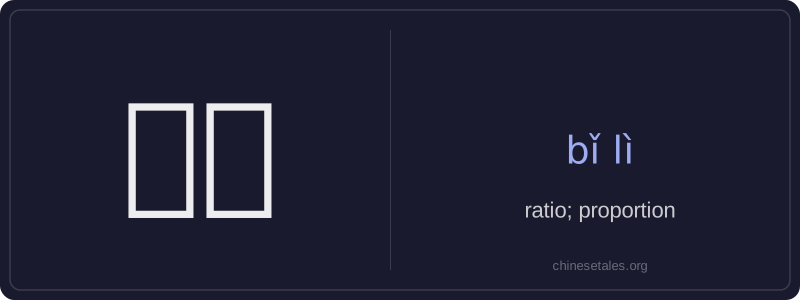
比例 (bǐ lì) means 'ratio' or 'proportion' — the quantitative relationship between two or more quantities, often expressed as a fraction, decimal, or with a colon (e.g., 3:2). The character 比 (bǐ) means 'to compare' or 'to match', while 例 (lì) means 'example', 'case', or 'instance'; together, they convey the idea of comparing things by standardized cases or relative measures. This word is widely used in mathematics, statistics, design, economics, and everyday comparisons — for instance, when describing the ratio of ingredients in a recipe, screen resolution (16:9), or demographic data.
Unlike colloquial expressions like ‘几分之几’ (a fraction of), 比例 carries a formal, precise tone and frequently appears in written reports, charts, academic contexts, and technical instructions. It can function as the subject, object, or complement in a sentence, and is often modified by measure words like ‘个’ (e.g., 一个比例) or quantifiers like ‘一定’ (a certain ratio) or ‘适当’ (an appropriate proportion).
Example Sentences
Related Words
见面
见面 literally means 'see face' — combining 见 (t
背后
背后 literally means 'back + behind' and functions
我的
我的 (wǒ de) is a possessive pronoun meaning 'my'
中学
'Zhōngxué' literally combines 'zhōng' (middle)
面条
‘面条’ (miàn tiáo) literally means ‘flour str
后来
Later (hòulái) is an adverb meaning 'afterwards'
在家
'Zài jiā' literally combines the preposition 'z
不对
不对 (bù duì) literally combines 不 (bù), meani