Word Explanation
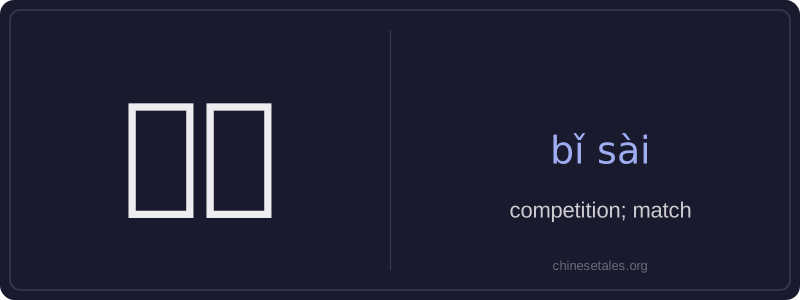
比赛 (bǐ sài) is a noun meaning 'competition' or 'match' — any organized contest where individuals or teams compete to win, such as in sports, academics, or arts. The character 比 (bǐ) originally means 'to compare' or 'to measure against', while 赛 (sài) means 'to compete' or 'a contest'. Together, they emphasize the core idea of structured, rule-based rivalry with a clear goal: determining who performs best.
This word is widely used in everyday Mandarin for both formal and informal settings — from school spelling bees and Olympic events to friendly video game tournaments. It’s neutral in register and commonly appears after classifiers like 一場 (yì chǎng, 'a match') or 一次 (yí cì, 'an instance'). Unlike some English synonyms, 比赛 rarely implies hostility; it carries a positive, spirited connotation of fair play and mutual challenge.
Example Sentences
Related Words
见面
见面 literally means 'see face' — combining 见 (t
背后
背后 literally means 'back + behind' and functions
我的
我的 (wǒ de) is a possessive pronoun meaning 'my'
中学
'Zhōngxué' literally combines 'zhōng' (middle)
面条
‘面条’ (miàn tiáo) literally means ‘flour str
后来
Later (hòulái) is an adverb meaning 'afterwards'
在家
'Zài jiā' literally combines the preposition 'z
不对
不对 (bù duì) literally combines 不 (bù), meani