Word Explanation
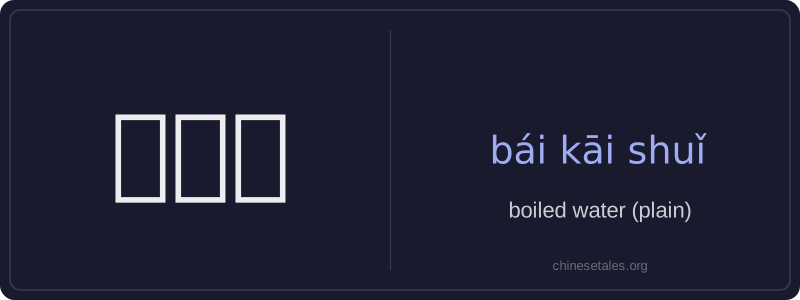
‘Bái kāi shuǐ’ literally means ‘white boiled water’ — ‘bái’ (white) here implies plain, unadulterated, and free of additives; ‘kāi’ means boiled or brought to a rolling boil; and ‘shuǐ’ is water. Together, the term specifically refers to tap or filtered water that has been boiled and then cooled to room temperature — the standard, safe, and culturally preferred drinking water in many Chinese households and medical contexts.
This drink is deeply embedded in traditional Chinese health practices: boiling kills bacteria and pathogens, and consuming it warm or at room temperature is believed to support digestion and balance internal ‘qi’. It’s commonly served in homes, hospitals, offices, and restaurants (often in thermoses or glass pitchers), and is distinct from mineral water, tap water, or tea. Unlike Western preferences for cold or flavored beverages, ‘bái kāi shuǐ’ is valued precisely for its simplicity and neutrality.
Example Sentences
Related Words
见面
见面 literally means 'see face' — combining 见 (t
背后
背后 literally means 'back + behind' and functions
我的
我的 (wǒ de) is a possessive pronoun meaning 'my'
中学
'Zhōngxué' literally combines 'zhōng' (middle)
面条
‘面条’ (miàn tiáo) literally means ‘flour str
后来
Later (hòulái) is an adverb meaning 'afterwards'
在家
'Zài jiā' literally combines the preposition 'z
不对
不对 (bù duì) literally combines 不 (bù), meani