Word Explanation
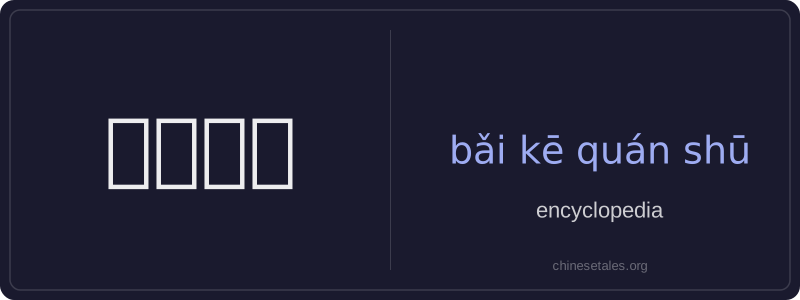
百科全书 literally means 'hundred subjects, complete book' — a compound that reflects its comprehensive nature. The character 百 (bǎi) here is used figuratively to mean 'many' or 'all', not the literal number one hundred; 科 (kē) refers to academic disciplines or fields of knowledge (e.g., biology, history); 全 (quán) means 'complete' or 'comprehensive'; and 书 (shū) simply means 'book'. Together, they form a formal, literary term for an encyclopedia — a systematic, authoritative reference work covering a wide range of human knowledge.
This word is commonly used in both print and digital contexts, though it carries a slightly traditional or scholarly tone compared to more colloquial alternatives like 词典 (dictionary) or online sources like 百度百科 (Baidu Baike). It appears frequently in academic, educational, and library settings, and often implies depth, reliability, and editorial rigor. While modern encyclopedias may be digital or multimedia, the term 百科全书 still evokes authority and breadth of coverage across disciplines — including natural sciences, history, culture, and yes, animals.
Example Sentences
Related Words
见面
见面 literally means 'see face' — combining 见 (t
背后
背后 literally means 'back + behind' and functions
我的
我的 (wǒ de) is a possessive pronoun meaning 'my'
中学
'Zhōngxué' literally combines 'zhōng' (middle)
面条
‘面条’ (miàn tiáo) literally means ‘flour str
后来
Later (hòulái) is an adverb meaning 'afterwards'
在家
'Zài jiā' literally combines the preposition 'z
不对
不对 (bù duì) literally combines 不 (bù), meani