Word Explanation
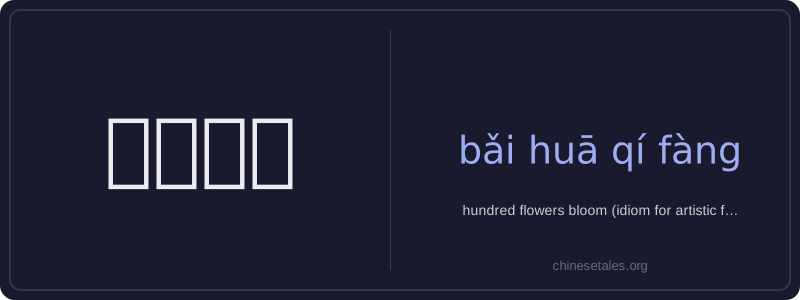
‘Bǎi huā qí fàng’ literally means ‘a hundred flowers bloom together.’ Each character contributes to this vivid image: 百 (bǎi) means ‘hundred,’ symbolizing abundance; 花 (huā) means ‘flower,’ representing diverse artistic or intellectual expressions; 齐 (qí) means ‘together’ or ‘in unison,’ suggesting harmony and simultaneity; and 放 (fàng) means ‘to bloom’ or ‘to open,’ conveying vitality and release. Though rooted in nature imagery, the phrase functions primarily as a political and cultural idiom.
It entered modern usage through Mao Zedong’s 1956 ‘Hundred Flowers Campaign,’ promoting open discussion and creative freedom in arts and sciences. Today, it’s used both seriously — in policy discourse or academic writing about pluralism — and ironically, when describing chaotic diversity without coordination. It’s formal and literary, rarely used in casual speech, and often appears in written media or official contexts discussing culture, education, or innovation.
Example Sentences
Related Words
见面
见面 literally means 'see face' — combining 见 (t
背后
背后 literally means 'back + behind' and functions
我的
我的 (wǒ de) is a possessive pronoun meaning 'my'
中学
'Zhōngxué' literally combines 'zhōng' (middle)
面条
‘面条’ (miàn tiáo) literally means ‘flour str
后来
Later (hòulái) is an adverb meaning 'afterwards'
在家
'Zài jiā' literally combines the preposition 'z
不对
不对 (bù duì) literally combines 不 (bù), meani