Word Explanation
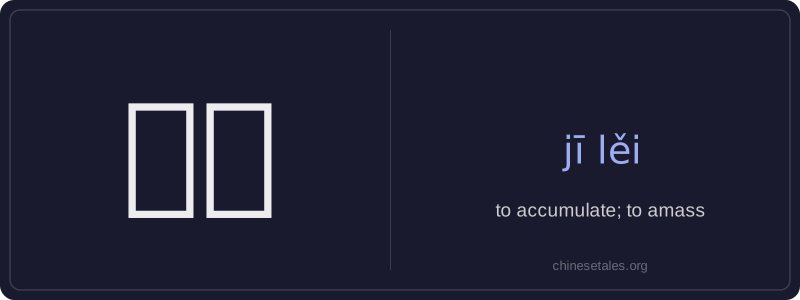
积累 (jī lěi) is a verb meaning 'to accumulate' or 'to amass'—often referring to the gradual gathering of something intangible and valuable over time, such as knowledge, experience, skills, or resources. The first character 积 (jī) conveys 'to pile up' or 'to store', while 累 (lěi) adds the sense of 'layer upon layer' or 'repeated addition'; together, they emphasize steady, sustained accumulation rather than sudden acquisition.
This word is commonly used in academic, professional, and personal development contexts—for example, when describing how students build vocabulary through daily reading, or how entrepreneurs gather industry insights over years. It carries a positive, effortful connotation and is rarely used for negative or undesirable accumulation (e.g., debt or waste), for which other terms like 欠 (qiàn) or 堆积 (duījī) are preferred. It frequently appears in written Chinese and formal speech, often followed by nouns like 经验 (experience), 知识 (knowledge), or 资源 (resources).
Example Sentences
Related Words
见面
见面 literally means 'see face' — combining 见 (t
背后
背后 literally means 'back + behind' and functions
我的
我的 (wǒ de) is a possessive pronoun meaning 'my'
中学
'Zhōngxué' literally combines 'zhōng' (middle)
面条
‘面条’ (miàn tiáo) literally means ‘flour str
后来
Later (hòulái) is an adverb meaning 'afterwards'
在家
'Zài jiā' literally combines the preposition 'z
不对
不对 (bù duì) literally combines 不 (bù), meani