Word Explanation
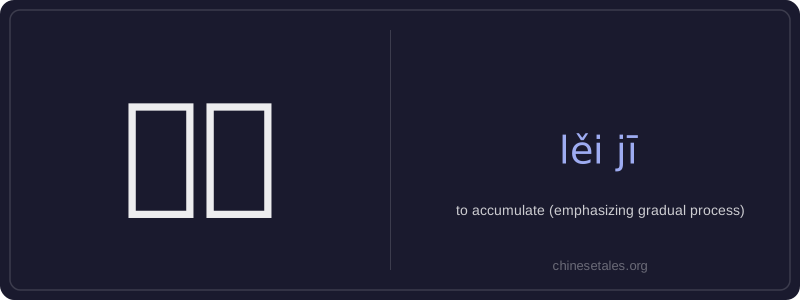
累积 (lěi jī) is a verb meaning 'to accumulate' — emphasizing a gradual, step-by-step buildup over time, often of something measurable or intangible like experience, knowledge, wealth, or evidence. The character 累 (lěi) conveys the idea of repeated action or layering, while 积 (jī) means 'to pile up' or 'to store', reinforcing the sense of steady accumulation. Together, they form a compound that stresses continuity and incrementality, not sudden increase.
This word is commonly used in formal, academic, or professional contexts — for instance, when discussing data trends, learning outcomes, environmental changes, or financial growth. It frequently appears with time-related phrases like '多年来' (over many years), '逐渐' (gradually), or '不断' (continuously). Unlike the more colloquial 积累 (jī lěi), which shares similar meaning but has broader register usage, 累积 carries a slightly more technical or statistical nuance and is often found in written reports, scientific descriptions, or policy documents.
Example Sentences
Related Words
见面
见面 literally means 'see face' — combining 见 (t
背后
背后 literally means 'back + behind' and functions
我的
我的 (wǒ de) is a possessive pronoun meaning 'my'
中学
'Zhōngxué' literally combines 'zhōng' (middle)
面条
‘面条’ (miàn tiáo) literally means ‘flour str
后来
Later (hòulái) is an adverb meaning 'afterwards'
在家
'Zài jiā' literally combines the preposition 'z
不对
不对 (bù duì) literally combines 不 (bù), meani