Word Explanation
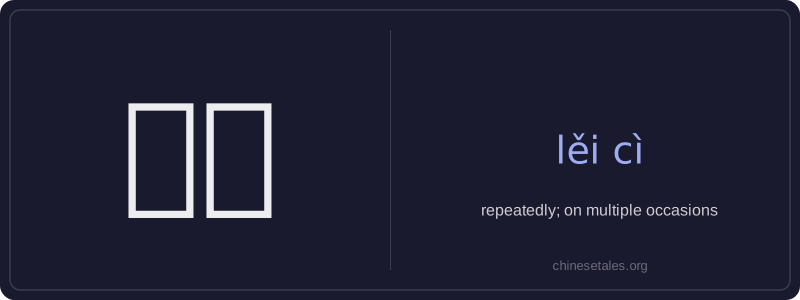
累次 means 'repeatedly' or 'on multiple occasions', emphasizing that an action has occurred several times, often with a sense of accumulation over time. The character 累 (lěi) conveys 'accumulation' or 'successive addition', while 次 (cì) means 'time' or 'instance'—together they form an adverb indicating repeated occurrence, not just once or twice but in a series. It’s commonly used in formal or written Chinese, especially in reports, official notices, or academic contexts to stress frequency and persistence.
This word carries a neutral-to-slightly-emphatic tone; it doesn’t imply fatigue (unlike the homophone 累 lèi), nor does it suggest randomness—it implies intentionality or observable recurrence. It often appears before verbs (e.g., 累次提醒, 累次违规) and pairs well with words like 'warning', 'violation', 'request', or 'observation'. While similar to other frequency adverbs, 累次 specifically highlights the cumulative nature of the repetitions, making it more precise than general terms like 经常 or 多次.
Example Sentences
Related Words
见面
见面 literally means 'see face' — combining 见 (t
背后
背后 literally means 'back + behind' and functions
我的
我的 (wǒ de) is a possessive pronoun meaning 'my'
中学
'Zhōngxué' literally combines 'zhōng' (middle)
面条
‘面条’ (miàn tiáo) literally means ‘flour str
后来
Later (hòulái) is an adverb meaning 'afterwards'
在家
'Zài jiā' literally combines the preposition 'z
不对
不对 (bù duì) literally combines 不 (bù), meani