Word Explanation
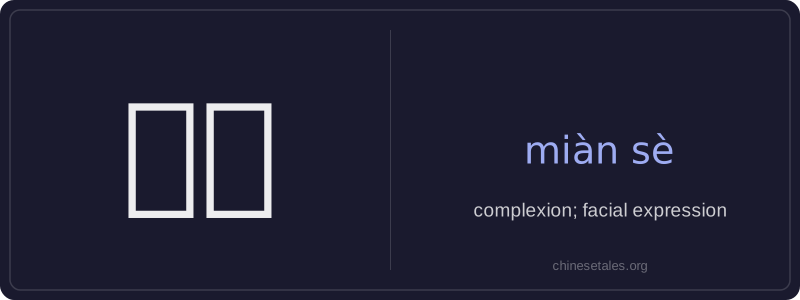
面 (miàn) means 'face', and 色 (sè) means 'color' or 'complexion'. Together, 面色 literally means 'face color', and it refers to the visible appearance of a person's face — especially as an indicator of physical health or emotional state. Unlike the English word 'complexion', which often emphasizes skin tone or texture over time, 面色 is used dynamically: it changes with illness, fatigue, embarrassment, anger, or joy, making it central in traditional Chinese medicine and everyday observation.
This term appears frequently in medical contexts (e.g., diagnosing fever or anemia), literature (describing characters’ inner feelings), and daily conversation when commenting on someone’s well-being ('Your complexion looks pale — did you sleep well?'). It is neutral in register but slightly formal or literary; in casual speech, people may say 脸色 (liǎn sè), which is more common and nearly identical in meaning, though 面色 tends to sound more precise or clinical.
Example Sentences
Related Words
见面
见面 literally means 'see face' — combining 见 (t
背后
背后 literally means 'back + behind' and functions
我的
我的 (wǒ de) is a possessive pronoun meaning 'my'
中学
'Zhōngxué' literally combines 'zhōng' (middle)
面条
‘面条’ (miàn tiáo) literally means ‘flour str
后来
Later (hòulái) is an adverb meaning 'afterwards'
在家
'Zài jiā' literally combines the preposition 'z
不对
不对 (bù duì) literally combines 不 (bù), meani