Word Explanation
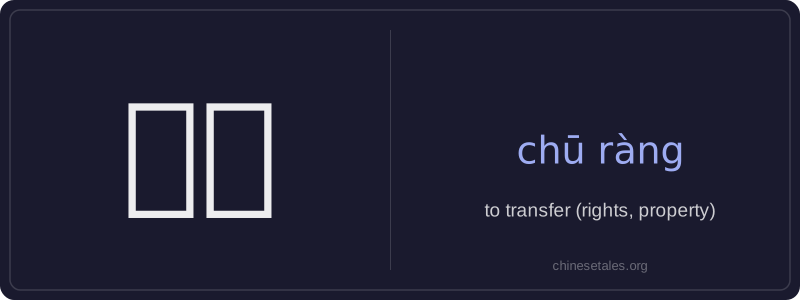
出让 (chū ràng) is a formal verb meaning 'to transfer (rights, property, or interests)' — typically in legal, business, or governmental contexts. The first character 出 (chū) means 'to go out' or 'to issue', suggesting the act of giving something away or relinquishing control; the second character 让 (ràng) means 'to yield', 'to give up', or 'to cede'. Together, they emphasize voluntary, official transfer — especially of land use rights, shares, licenses, or contractual entitlements. It implies a deliberate, often documented, handover from one party to another, and is rarely used for personal, informal exchanges.
This term appears frequently in real estate, corporate finance, and administrative documents in China. For example, local governments may 'outsource' land use rights to developers via 出让, and companies might 出让 equity stakes to investors. It carries a neutral-to-formal register and is not used for everyday items like books or clothes — those would use words like 卖 (mài, 'to sell') or 给 (gěi, 'to give').
Example Sentences
Related Words
见面
见面 literally means 'see face' — combining 见 (t
背后
背后 literally means 'back + behind' and functions
我的
我的 (wǒ de) is a possessive pronoun meaning 'my'
中学
'Zhōngxué' literally combines 'zhōng' (middle)
面条
‘面条’ (miàn tiáo) literally means ‘flour str
后来
Later (hòulái) is an adverb meaning 'afterwards'
在家
'Zài jiā' literally combines the preposition 'z
不对
不对 (bù duì) literally combines 不 (bù), meani