Word Explanation
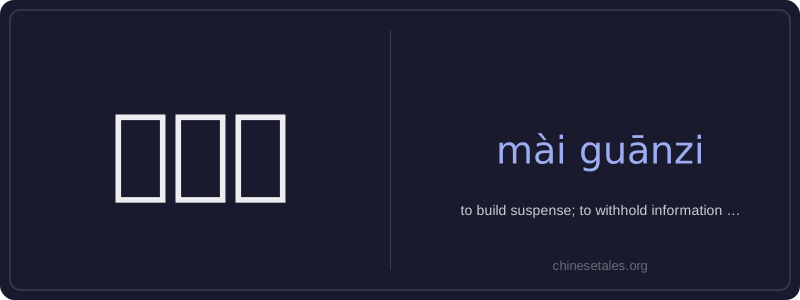
'卖关子' (mài guānzi) is an idiomatic verb meaning to deliberately withhold information or delay revealing something in order to build suspense, tease, or stir curiosity—much like a storyteller pausing before the climax. Literally, '卖' means 'to sell', '关' means 'gate' or 'barrier', and '子' is a nominal suffix; together, the phrase evokes the image of 'selling a gate'—setting up an obstacle to knowledge, then charging attention (not money) for its removal.
This expression is commonly used in informal spoken Chinese, especially when someone is being playfully mysterious—like a friend hinting at big news but refusing to spill the details, or a teacher pausing before announcing exam results. It carries a lighthearted, often slightly mischievous connotation, not malice. While it can occasionally sound mildly critical (e.g., if overused), it’s generally neutral-to-positive and widely understood across age groups.
Example Sentences
Related Words
见面
见面 literally means 'see face' — combining 见 (t
背后
背后 literally means 'back + behind' and functions
我的
我的 (wǒ de) is a possessive pronoun meaning 'my'
中学
'Zhōngxué' literally combines 'zhōng' (middle)
面条
‘面条’ (miàn tiáo) literally means ‘flour str
后来
Later (hòulái) is an adverb meaning 'afterwards'
在家
'Zài jiā' literally combines the preposition 'z
不对
不对 (bù duì) literally combines 不 (bù), meani