Word Explanation
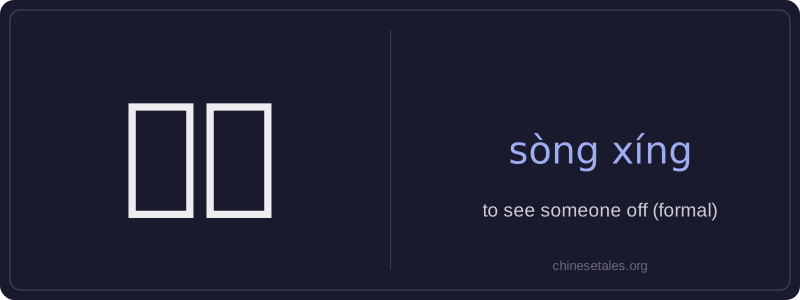
‘送行’ (sòng xíng) is a formal verb meaning ‘to see someone off’ — typically when a person departs for a journey, such as traveling abroad, moving away, or leaving for military service. The first character 送 (sòng) means ‘to send’ or ‘to give,’ and the second character 行 (xíng) means ‘to go’ or ‘to travel.’ Together, they literally convey ‘sending someone on their way,’ emphasizing the act of accompanying and bidding farewell at the point of departure.
This expression is commonly used in written Chinese and formal spoken contexts — for example, at train stations, airports, or graduation ceremonies. It carries a respectful, warm, and slightly solemn tone, often implying emotional significance or social obligation. Unlike casual farewells like ‘bye’ or ‘see you later,’ 送行 suggests active participation: standing with the traveler, exchanging words, perhaps giving gifts or well-wishes, and staying until they leave sight.
Example Sentences
Related Words
见面
见面 literally means 'see face' — combining 见 (t
背后
背后 literally means 'back + behind' and functions
我的
我的 (wǒ de) is a possessive pronoun meaning 'my'
中学
'Zhōngxué' literally combines 'zhōng' (middle)
面条
‘面条’ (miàn tiáo) literally means ‘flour str
后来
Later (hòulái) is an adverb meaning 'afterwards'
在家
'Zài jiā' literally combines the preposition 'z
不对
不对 (bù duì) literally combines 不 (bù), meani