Word Explanation
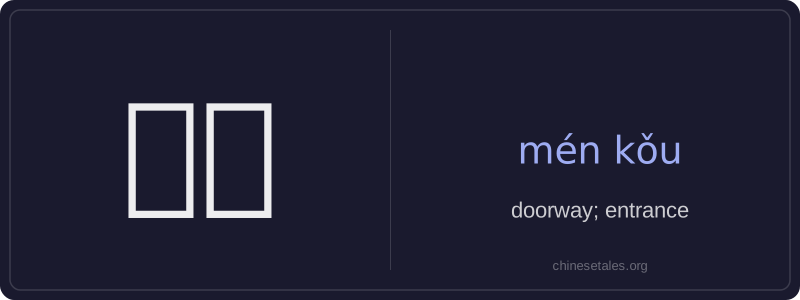
门口 literally means 'door mouth' — combining 门 (mén, 'door') and 口 (kǒu, 'mouth' or 'opening'). In Chinese, 口 often functions metaphorically to denote an entrance or aperture, much like 'mouth' does in English expressions such as 'river mouth' or 'cave mouth'. So 门口 refers specifically to the space immediately outside or at the threshold of a door — not just the architectural frame, but the functional zone where people enter or exit.
This word is commonly used for both literal and slightly extended meanings: it can describe the physical entrance to a building, room, shop, or gate, and sometimes appears idiomatically in phrases like 门口有车 (There’s a car at the entrance) or 在门口等 (Wait at the entrance). It’s neutral in register, appropriate in spoken and written contexts, and frequently appears in directions, descriptions of location, and daily interactions involving access or arrival.
Example Sentences
Related Words
见面
见面 literally means 'see face' — combining 见 (t
背后
背后 literally means 'back + behind' and functions
我的
我的 (wǒ de) is a possessive pronoun meaning 'my'
中学
'Zhōngxué' literally combines 'zhōng' (middle)
面条
‘面条’ (miàn tiáo) literally means ‘flour str
后来
Later (hòulái) is an adverb meaning 'afterwards'
在家
'Zài jiā' literally combines the preposition 'z
不对
不对 (bù duì) literally combines 不 (bù), meani