Word Explanation
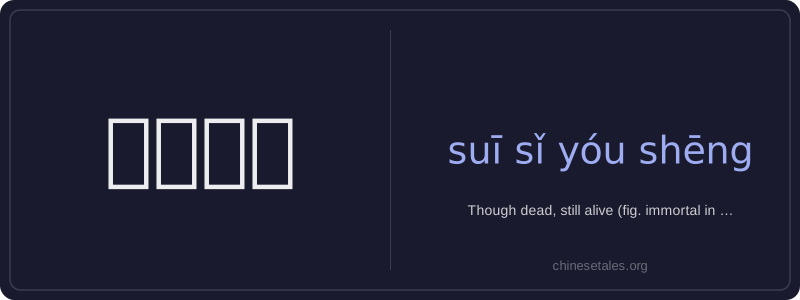
‘虽死犹生’ is a classical four-character idiom (chengyu) meaning ‘though dead, still alive’—not literally, but in spirit, memory, or moral influence. It conveys that someone’s virtue, achievements, or ideals endure powerfully after their physical death, making them spiritually immortal. The characters combine logically: 虽 (‘although’) introduces the contrast; 死 (‘death’) is the apparent end; 犹 (‘still, yet’) signals persistence despite that end; and 生 (‘life, alive’) affirms enduring vitality of legacy or principle.
This phrase is used reverently, often for heroic, selfless, or profoundly inspiring figures—revolutionaries, martyrs, great teachers, or cultural icons. It carries solemn, elevated register and appears frequently in memorial speeches, historical writing, literature, and formal tributes. Unlike casual expressions of remembrance, it emphasizes active, living impact—not just being remembered, but continuing to inspire action and uphold values.
Example Sentences
Related Words
见面
见面 literally means 'see face' — combining 见 (t
背后
背后 literally means 'back + behind' and functions
我的
我的 (wǒ de) is a possessive pronoun meaning 'my'
中学
'Zhōngxué' literally combines 'zhōng' (middle)
面条
‘面条’ (miàn tiáo) literally means ‘flour str
后来
Later (hòulái) is an adverb meaning 'afterwards'
在家
'Zài jiā' literally combines the preposition 'z
不对
不对 (bù duì) literally combines 不 (bù), meani