Word Explanation
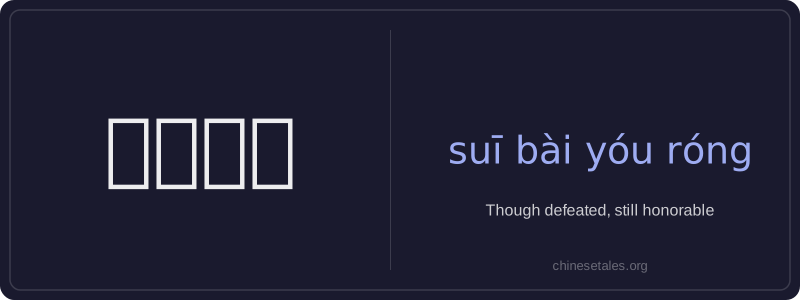
‘虽败犹荣’ is a classical four-character idiom meaning ‘though defeated, still honorable.’ It expresses admiration for someone who loses fairly or courageously—especially in competition, effort, or moral integrity—but earns deep respect through their dignity, perseverance, or noble conduct. Literally: 虽 (although), 败 (defeated), 犹 (still), 荣 (honorable/glorious). The phrase emphasizes that honor lies not solely in winning, but in how one faces adversity.
This idiom is often used in sports commentary, academic or artistic pursuits, and moral storytelling. It carries a warm, uplifting tone—never sarcastic—and reflects core Chinese values like resilience, humility, and virtue over victory. It’s common in formal speeches, news reports about underdog achievements, and motivational contexts. Though structurally noun-like, it functions adjectivally (e.g., ‘a 虽败犹荣 performance’) or nominally (e.g., ‘this was a 虽败犹荣’).
Example Sentences
Related Words
见面
见面 literally means 'see face' — combining 见 (t
背后
背后 literally means 'back + behind' and functions
我的
我的 (wǒ de) is a possessive pronoun meaning 'my'
中学
'Zhōngxué' literally combines 'zhōng' (middle)
面条
‘面条’ (miàn tiáo) literally means ‘flour str
后来
Later (hòulái) is an adverb meaning 'afterwards'
在家
'Zài jiā' literally combines the preposition 'z
不对
不对 (bù duì) literally combines 不 (bù), meani