Word Explanation
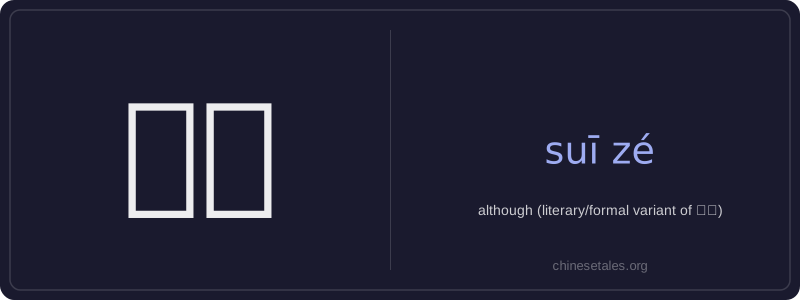
虽则 is a formal, literary conjunction meaning 'although' or 'even though'. It functions identically to the more common 虽然 but appears primarily in written Chinese—such as classical texts, formal essays, official documents, and literary prose—and is rarely used in everyday speech. The character 虽 carries the core meaning of concession ('despite'), while 则 serves as a grammatical particle reinforcing contrast or logical sequence; together, they form a fixed, two-character conjunction emphasizing a strong contrast between two clauses.
This word introduces a concessive clause that precedes and contrasts with the main clause (which usually follows after a comma or period). Like other concessive conjunctions in Chinese, it does not require a corresponding 'but' or 'however' in the main clause—the contrast is implied. While structurally parallel to 虽然, 虽则 conveys greater stylistic weight and solemnity, making it suitable for rhetorical emphasis or elevated expression.
Example Sentences
Related Words
见面
见面 literally means 'see face' — combining 见 (t
背后
背后 literally means 'back + behind' and functions
我的
我的 (wǒ de) is a possessive pronoun meaning 'my'
中学
'Zhōngxué' literally combines 'zhōng' (middle)
面条
‘面条’ (miàn tiáo) literally means ‘flour str
后来
Later (hòulái) is an adverb meaning 'afterwards'
在家
'Zài jiā' literally combines the preposition 'z
不对
不对 (bù duì) literally combines 不 (bù), meani