Word Explanation
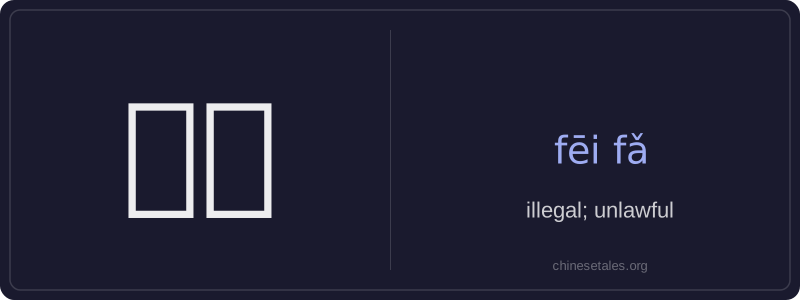
非法 (fēi fǎ) is an adjective meaning 'illegal' or 'unlawful' — describing actions, objects, or statuses that violate laws or official regulations. The first character 非 (fēi) means 'not' or 'non-', and the second character 法 (fǎ) means 'law' or 'legal system'; together, they literally mean 'not law', i.e., contrary to established legal standards. It’s commonly used in formal and semi-formal contexts — news reports, government notices, public announcements, and everyday warnings about prohibited behavior.
This word typically modifies nouns directly (e.g., 非法活动 'illegal activities', 非法行医 'practicing medicine without a license') and rarely stands alone as a predicate without additional context. It carries a strong negative connotation and implies official disapproval or potential penalties. While it can describe anything from unauthorized street vending to cybercrime, it’s especially frequent in discussions about public safety, healthcare regulation, environmental protection, and digital privacy — areas where compliance with national laws is strictly enforced.
Example Sentences
Related Words
见面
见面 literally means 'see face' — combining 见 (t
背后
背后 literally means 'back + behind' and functions
我的
我的 (wǒ de) is a possessive pronoun meaning 'my'
中学
'Zhōngxué' literally combines 'zhōng' (middle)
面条
‘面条’ (miàn tiáo) literally means ‘flour str
后来
Later (hòulái) is an adverb meaning 'afterwards'
在家
'Zài jiā' literally combines the preposition 'z
不对
不对 (bù duì) literally combines 不 (bù), meani