Word Explanation
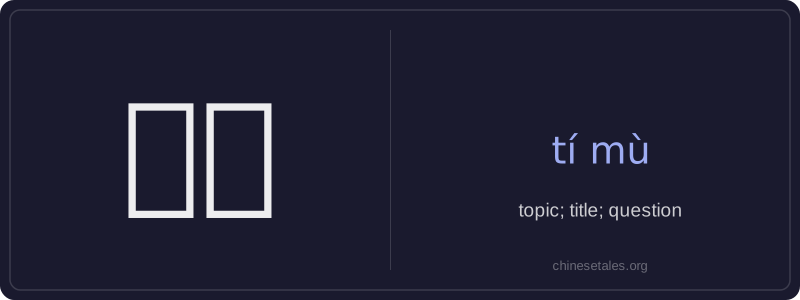
题目 (tímù) is a noun meaning 'topic', 'title', or 'question', depending on context. It combines 题 (tí), which means 'to pose' or 'subject matter', and 目 (mù), meaning 'item' or 'entry' — together, they convey the idea of a clearly defined subject or heading. In academic settings, it most commonly refers to an exam or homework question; in writing or presentations, it denotes the title or main theme.
The word appears frequently in school life, publishing, and daily communication — for example, when assigning tasks ('Please write three questions as your homework题目'), introducing a speech ('The 题目 of today’s talk is climate change'), or discussing article headings ('This newspaper article has a very clear 题目'). Unlike more casual terms like 主题 (zhǔtí, 'theme'), 题目 carries a slightly formal or structured connotation, often implying something assigned, examined, or explicitly labeled.
Example Sentences
Related Words
见面
见面 literally means 'see face' — combining 见 (t
背后
背后 literally means 'back + behind' and functions
我的
我的 (wǒ de) is a possessive pronoun meaning 'my'
中学
'Zhōngxué' literally combines 'zhōng' (middle)
面条
‘面条’ (miàn tiáo) literally means ‘flour str
后来
Later (hòulái) is an adverb meaning 'afterwards'
在家
'Zài jiā' literally combines the preposition 'z
不对
不对 (bù duì) literally combines 不 (bù), meani