Word Explanation
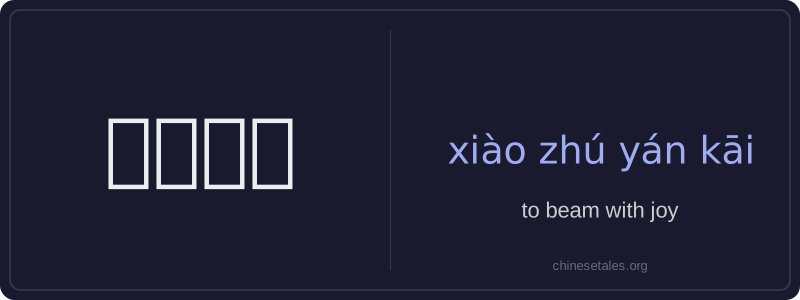
‘笑逐颜开’ is a vivid, literary idiom describing someone’s face lighting up with spontaneous, uncontainable joy—literally ‘laughter chases away the solemnity on one’s face, and it opens wide in delight.’ Each character contributes: 笑 (laughter), 逐 (chases or follows closely), 颜 (face or countenance), and 开 (opens or brightens). Together, they paint a dynamic image of joy physically transforming one’s expression.
This phrase is commonly used in written Chinese, storytelling, or formal speech to emphasize heartfelt, radiant happiness—often triggered by good news, reunions, or long-awaited successes. It carries a warm, positive tone and implies sincerity and emotional release, not just polite smiling. While it can appear in spoken language, it sounds more refined than everyday expressions like 高兴 or 开心, and is rarely used in casual conversation among peers.
Example Sentences
Related Words
见面
见面 literally means 'see face' — combining 见 (t
背后
背后 literally means 'back + behind' and functions
我的
我的 (wǒ de) is a possessive pronoun meaning 'my'
中学
'Zhōngxué' literally combines 'zhōng' (middle)
面条
‘面条’ (miàn tiáo) literally means ‘flour str
后来
Later (hòulái) is an adverb meaning 'afterwards'
在家
'Zài jiā' literally combines the preposition 'z
不对
不对 (bù duì) literally combines 不 (bù), meani