Word Explanation
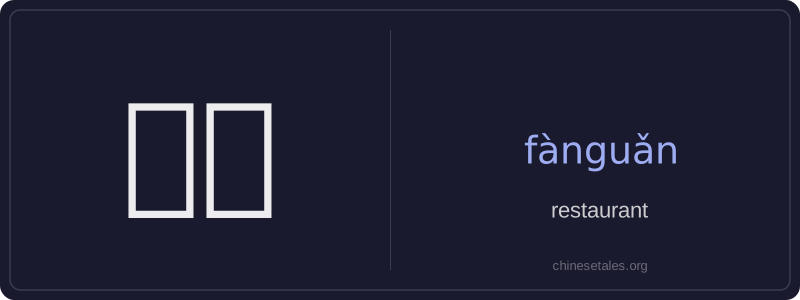
饭馆 (fànguǎn) literally combines 饭 (fàn), meaning 'cooked rice' or more broadly 'meal', and 馆 (guǎn), meaning 'establishment' or 'hall'. Together, they form a common, neutral-term noun for a place where people go to eat prepared meals — essentially, a restaurant. It’s widely used in everyday speech across China and is neither formal nor slangy; it fits casual conversations, directions, and descriptions of local eateries.
Unlike more formal terms like 餐厅 (cāntīng) or upscale terms like 酒楼 (jiǔlóu), 饭馆 suggests a modest, functional, often family-run dining spot — think neighborhood noodle shops or home-style cooking venues. It carries no implication about cuisine type, price, or size, making it versatile and widely understood. While it can refer to any eatery serving full meals, it’s rarely used for fast-food chains, cafés, or street stalls — those are more commonly called 快餐店 (kuàicāndiàn), 咖啡馆 (kāfēiguǎn), or 小吃摊 (xiǎochī tān).
Example Sentences
Related Words
见面
见面 literally means 'see face' — combining 见 (t
背后
背后 literally means 'back + behind' and functions
我的
我的 (wǒ de) is a possessive pronoun meaning 'my'
中学
'Zhōngxué' literally combines 'zhōng' (middle)
面条
‘面条’ (miàn tiáo) literally means ‘flour str
后来
Later (hòulái) is an adverb meaning 'afterwards'
在家
'Zài jiā' literally combines the preposition 'z
不对
不对 (bù duì) literally combines 不 (bù), meani