Word Explanation
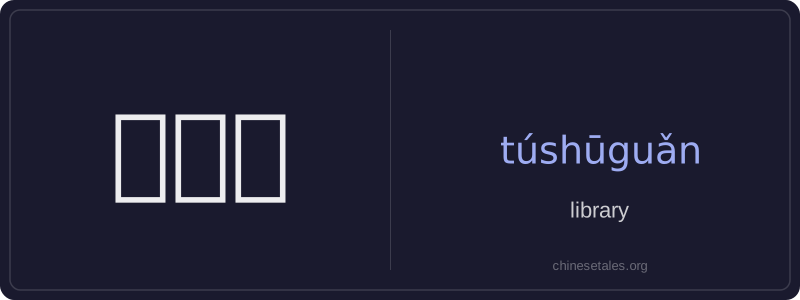
图书馆 (túshūguǎn) literally means 'picture-book-building' — combining 图 (tú, 'picture' or 'map'), 书 (shū, 'book'), and 馆 (guǎn, 'hall' or 'institution'). Historically, it referred to places housing classical texts and illustrated manuscripts; today it denotes any public or institutional facility where books, periodicals, digital resources, and other materials are collected, organized, and made available for reading, study, or borrowing. Libraries in China range from small community branches to massive national institutions like the National Library of China in Beijing.
The word is neutral in register and widely used across formal and informal contexts — whether asking for directions ('Where is the library?'), writing an academic paper, or telling a child about after-school activities. It’s always a countable noun, and typically preceded by classifiers like 一 (yī) or specific ones like 座 (zuò) when emphasizing structure ('a library building'). Unlike English, Chinese doesn’t use articles, so you’ll often hear it without modifiers unless specifying definiteness or quantity.
Example Sentences
Related Words
见面
见面 literally means 'see face' — combining 见 (t
背后
背后 literally means 'back + behind' and functions
我的
我的 (wǒ de) is a possessive pronoun meaning 'my'
中学
'Zhōngxué' literally combines 'zhōng' (middle)
面条
‘面条’ (miàn tiáo) literally means ‘flour str
后来
Later (hòulái) is an adverb meaning 'afterwards'
在家
'Zài jiā' literally combines the preposition 'z
不对
不对 (bù duì) literally combines 不 (bù), meani