Word Explanation
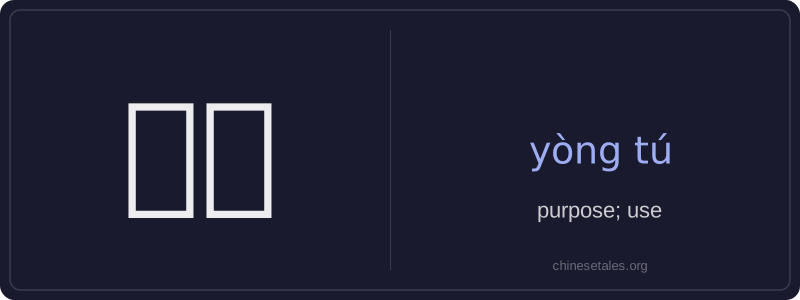
用途 is a noun meaning 'purpose' or 'use' — specifically, the intended function or application of something. It combines 用 (yòng), meaning 'to use' or 'usage', and 途 (tú), meaning 'route', 'way', or 'path'. Together, they evoke the idea of 'the path or way something is used' — hence, its core sense of 'intended purpose'. The word is commonly used in both spoken and written Chinese, especially when discussing functionality, design, or practical applications.
You’ll often see 用途 in contexts like product descriptions ('This tool has many uses'), technical specifications ('What is the main purpose of this device?'), or everyday explanations ('The purpose of this meeting is to review the schedule'). It’s neutral in register and works well in formal reports, casual conversation, and instructional texts. Unlike the verb 用, 用途 always functions as a noun and cannot be directly followed by an object — it requires prepositions like 的 or 是 to link to further explanation.
Example Sentences
Related Words
见面
见面 literally means 'see face' — combining 见 (t
背后
背后 literally means 'back + behind' and functions
我的
我的 (wǒ de) is a possessive pronoun meaning 'my'
中学
'Zhōngxué' literally combines 'zhōng' (middle)
面条
‘面条’ (miàn tiáo) literally means ‘flour str
后来
Later (hòulái) is an adverb meaning 'afterwards'
在家
'Zài jiā' literally combines the preposition 'z
不对
不对 (bù duì) literally combines 不 (bù), meani