Word Explanation
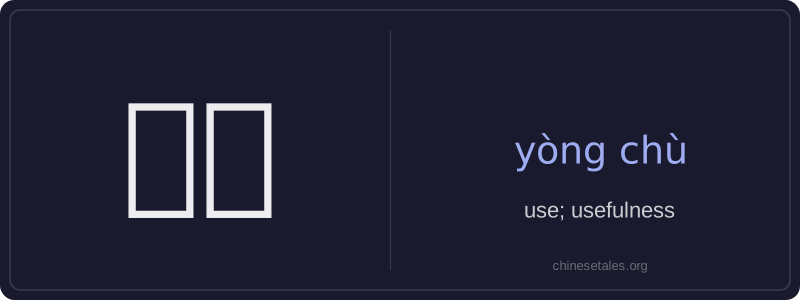
Yòngchù is a noun meaning 'use' or 'usefulness'—it refers to the practical function or purpose something serves. The first character, yòng, means 'to use' or 'use', and the second, chù, literally means 'place' or 'spot', but here it functions as a nominal suffix indicating 'a matter of' or 'an instance of'. Together, they form a compound that emphasizes utility rather than action: it’s not about *doing* the using, but about *what something is good for*. This word is commonly used in neutral-to-formal contexts when evaluating value, functionality, or relevance.
You’ll often hear yòngchù in questions like 有什麼用處? ('What’s its use?') or statements assessing practicality, such as '這個工具很有用處' ('This tool is very useful'). It tends to appear more in spoken and written evaluations than in casual chit-chat, and it’s rarely used alone without a modifier (e.g., 很大用處, 沒什麼用處). Unlike verbs like yòng (to use), yòngchù is always abstract and countable only in specific constructions (e.g., 多種用處).
Example Sentences
Related Words
见面
见面 literally means 'see face' — combining 见 (t
背后
背后 literally means 'back + behind' and functions
我的
我的 (wǒ de) is a possessive pronoun meaning 'my'
中学
'Zhōngxué' literally combines 'zhōng' (middle)
面条
‘面条’ (miàn tiáo) literally means ‘flour str
后来
Later (hòulái) is an adverb meaning 'afterwards'
在家
'Zài jiā' literally combines the preposition 'z
不对
不对 (bù duì) literally combines 不 (bù), meani